

Educational Technology is the present reality of learning and development, transforming training through modern tools and platforms. Due to the immense benefits of enhancing the learning environment, innovations in educational technology are largely preferred by L&D professionals.
Table of Contents
- What is Educational Technology?
- Benefits of Educational Technology in Learning and Development
- Key Platforms of Educational Technology in Learning and Development
- Conclusion
- Infographic
- Knowledge Check!
- Frequently Asked Questions (FAQs)
- What do you mean by Educational Technology?
- What is the objective of Educational Technology?
- What are the benefits of Educational Technology?
Are you curious about understanding education technology, its benefits, and key platforms? Keep reading!
What is Educational Technology?
The key aspect of revolutionizing modern learning- whether education offered at schools and universities or employee training- is the indispensable role of education technology. Educational Technology refers to using digital tools incorporating hardware such as computers mobile phones, etc., and software such as LMS and online courses combined with learning theories into the learning atmosphere to yield higher learning outcomes. Educational Technology aims to create an engaging learning experience that is fitted for personalized learning.
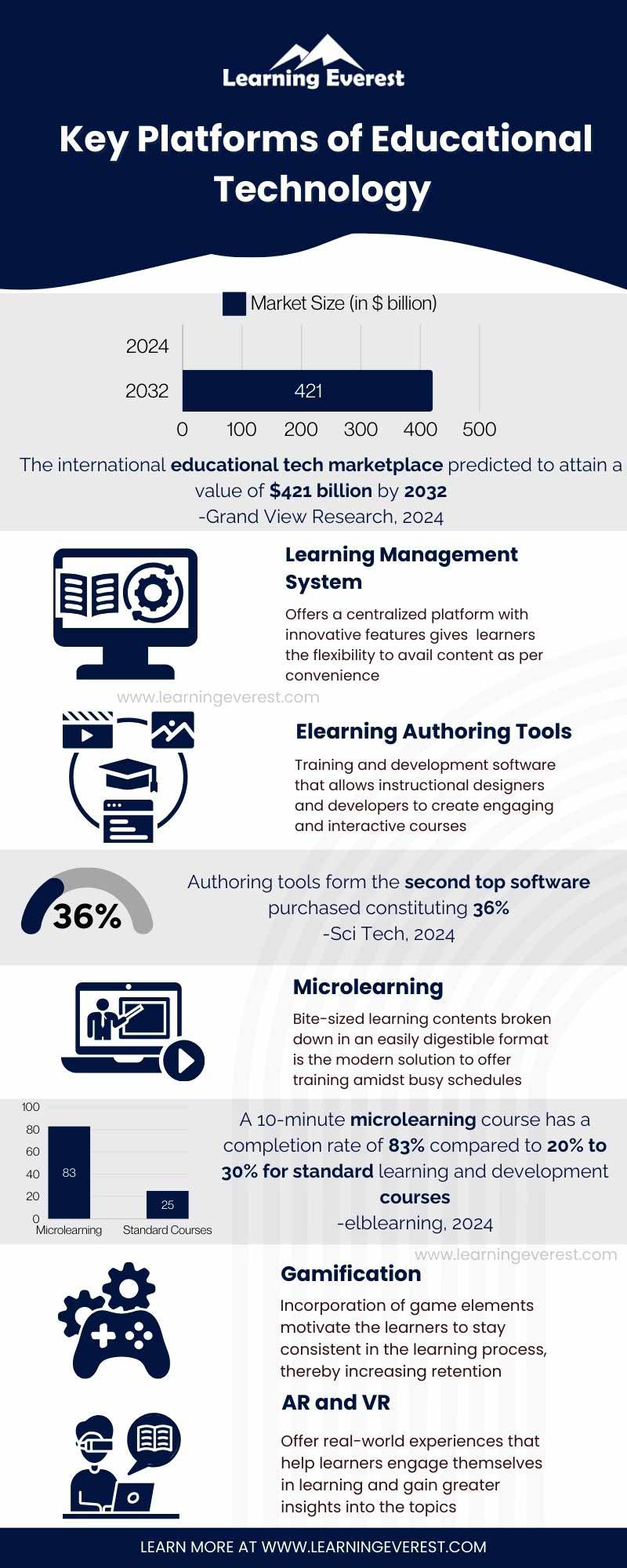
With the increased growth of eLearning, educational technology is fast growing with “the international educational tech marketplace predicted to attain a value of $421 billion by 2032.” (Source: Grand View Research). In short, educational technology is an innovative learning solution catering to the diverse learning needs of modern education.
Benefits of Educational Technology in Learning and Development
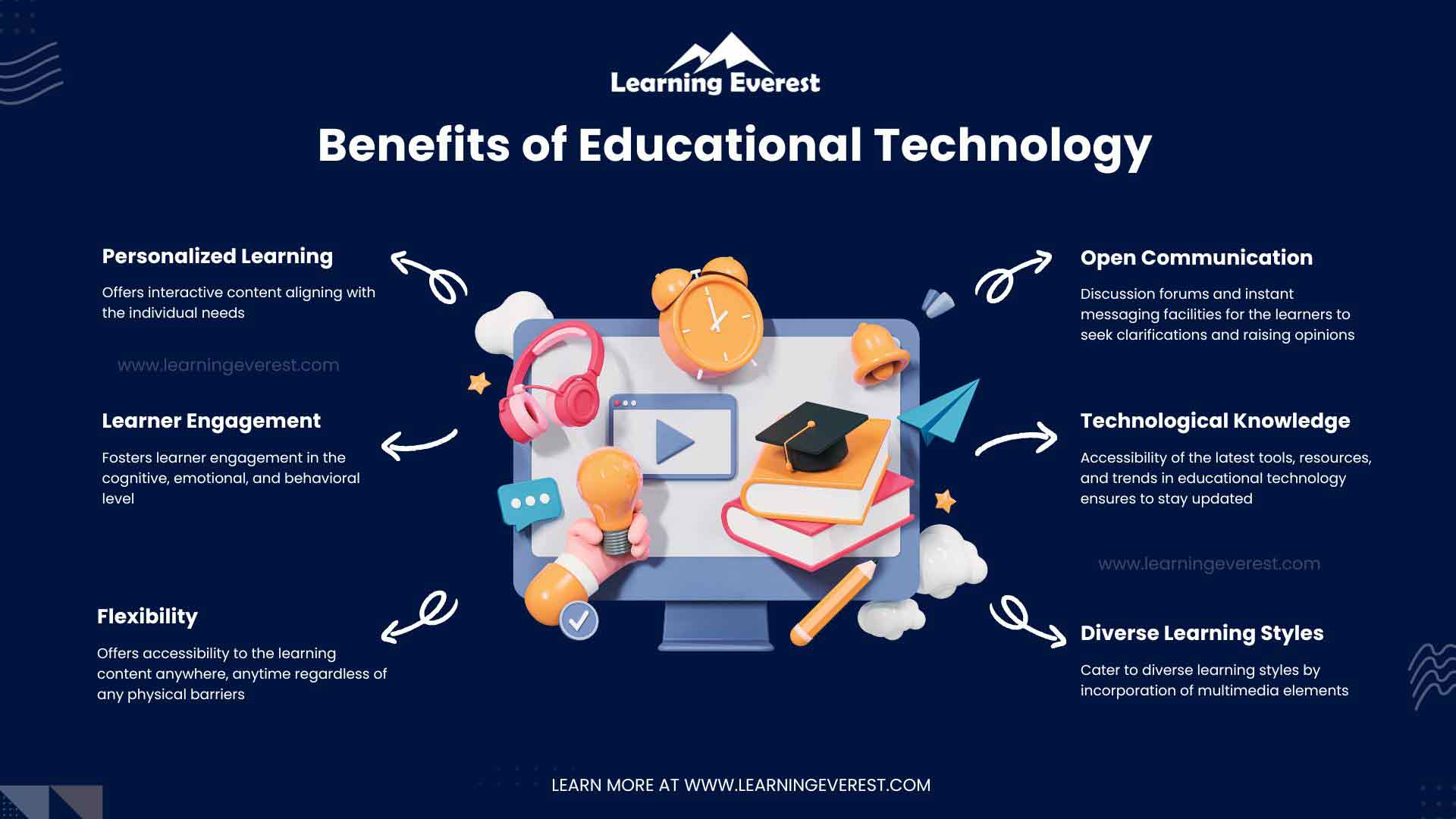
In today’s technology-centered world, where digital advancements permeate every facet of life, integrating technology into education and training is essential as they are vital components of human development. Educational Technology has a wide range of benefits in improving learning and development such as:
Benefits of Educational Technology
Personalized learning
Traditional learning fostered a culture of ‘one size fits all’ by applying the same pattern of training for all individuals. However, due to the immanent drawbacks of this pattern, both learners and trainers opt for personalized learning in the acquisition of new skills and knowledge presented in multiple formats. Organizations report higher outcomes as a result of personalized learning that in a survey “four out of five L&D professionals reported a clear link between personalized learning and improved employee engagement.”(Source: elearning industry). Educational Technology promotes personalized learning by offering interactive content aligning with the individual needs of the learners helping them to acquire knowledge at their own pace.
Learner Engagement
Educational technology with its variety of components projected through varied platforms motivates the learners to get engaged in the training. Engagement in the learning process involves three levels; cognitive level, emotional level, and behavioral level. The varied tools and adaptive learning technology immerses the learner in the learning process contributing to their cognitive understanding, the motivating and reinforcing factors emotionally engage the learners and the scope for active participation encourages social learning engaging the learners. The interactive and supportive environment offered in this manner fosters learner engagement.
Flexibility
Flexibility is a key characteristic of educational technology. Learners can access the learning content anywhere, anytime regardless of any physical barriers. In addition, the flexible pattern offers freedom of self-paced learning making the process learner-centered. Employees consider the aspect of flexibility for workplace training as it allows them to progress at their own pace and convenience.
Open Communication
The scope for open communication lacking in many traditional classrooms is a boon of educational technology. The online platforms offer discussion forums and instant messaging facilities for the learners encouraging them to get involved in learning by seeking clarifications for doubts and raising opinions. Moreover, technology paves the way for automated feedback on the learning progress motivating the learners.
Technological Knowledge
The accessibility of the latest tools, resources, and trends in educational technology ensures that learners stay updated with relevant technological advancements. This exposure to engaged learning helps learners keep abreast of the current industry standards. The learners in addition to gaining insights into the areas develop digital skills necessary for other areas as well.
Diverse learning styles
The technological platforms offer resources that cater to diverse learning styles by accommodating individual differences. The incorporation of multimedia elements promotes a chance for visual, auditory, and kinesthetic learners to acquire a deeper understanding of the information.
Key Platforms of Educational Technology in Learning and Development
By integrating digital tools into learning processes, educational technology caters to the various needs of learners involving engaging platforms to deliver the content. Let us delve into some of the key educational technology platforms beneficial for both training professionals and designers as well as learners offering maximized learning outcomes.
Learning Management System or LMS
“Learning Management Systems are software applications used for the creation, distribution, and managing the delivery of educational content and training or learning programs.” LMS contributes to engaged learning and employee retention in the case of workplace training. It offers a centralized platform with innovative features offering the learners the flexibility to avail content as per convenience and track and record their progress. In addition, it benefits training professionals to provide assessments, evaluate assignments, and track learner progress, thereby managing training programs.
Elearning Authoring Tools
“Elearning authoring tools are pieces of training and development software that enable the creation of digital learning content.” (Source: Elucidat). These tools allow instructional designers and developers to create engaging and interactive courses. Top eLearning authoring tools such as Articulate 360, Adobe Captivate, iSpring Suite, Camtasia, Lectora, and Elucidat encourage developing high-quality courses. According to statistical data by Sci-tech, authoring tools form the second “top software purchased constituting 36%.” Organizations can decide upon authoring tools based on their training needs including scalability, efficiency, development speed, content type, etc.
Microlearning
Microlearning with bite-sized learning contents broken down in an easily digestible format is the modern solution to offer training amidst busy schedules. The learning outcomes of microlearning courses are significantly greater when compared to traditional courses. “A 10-minute microlearning course has a completion rate of 83% compared to 20% to 30% for standard learning and development courses.” (Source: elblearning). The shorter format of microlearning increases retention rates and reinforces learning.
Gamification
Gamification entails the incorporation of game elements into the learning process to foster an interactive learning experience. In educational technology, there are mainly five game mechanics that instructional designers can integrate. They are points, badges and achievements, levels, challenges, and leaderboards. These elements motivate the learners to stay consistent in the learning process, thereby increasing retention and contributing to goal attainment.
AR and VR
Augmented Reality and Virtual Reality offer highly immersive experiences allowing learners to learn and attain knowledge in a simulated environment. They offer real-world experiences that help learners engage themselves in learning and gain greater insights into the topics. Moreover, they pave the way for accommodating and integrating diverse learning styles promoting an inclusive environment.
Conclusion
Educational Technology involving digital tools incorporating hardware and software combined with learning theories into the learning atmosphere addresses the diverse needs of modern learning. The major benefits of educational technology in learning and development are it offers scope for personalized learning, promotes learner engagement, flexible learning experience, encourages open communication, enhances technological knowledge, and caters to diverse learning styles.
The key platforms of educational technology that promote learning include Learning Management System (LMS), eLearning Authoring Tools, Microlearning, Gamification, and AR and VR. It is suggested that organizations utilize educational technology in their training for maximized learning outcomes.
Explore our innovative educational technology solutions tailored to your training requirements. Connect with us!
Infographic
Key Platforms of Educational Technology
Knowledge Check!
Frequently Asked Questions (FAQs)
What do you mean by Educational Technology?
Educational Technology refers to using digital tools incorporating hardware such as computers mobile phones, etc., and software such as LMS and online courses combined with learning theories into the learning atmosphere to yield higher learning outcomes.
What is the objective of Educational Technology?
Educational Technology aims to create an engaging learning experience fitted for personalized learning and caters to the diverse learning needs of modern learning.
What are the benefits of Educational Technology?
The major benefits of educational technology in learning and development are it offers scope for personalized learning, promotes learner engagement, flexible learning experience, encourages open communication, enhances technological knowledge, and caters to diverse learning styles.
Live Online Certification Trainings


Our Clients Our Work
