

Creating a sales training program directly impacts how sales are conducted and how effectively profit margins are achieved enabling organizations to stay competitive in the evolving market. By creating a sales program that is well-structured, organizations contribute to not only enhancing the skills and knowledge of the employees but also the overall business growth.
Table of Contents
- What is a Sales Training Program?
- What are the Key Components of a Sales Training Program?
- Why Should Organizations Decide Upon Creating a Sales Training Program?
- What are the Steps for Creating a Sales Training Program?
- Creating a Sales Training Program #Step 1: Evaluation
- Creating a Sales Training Program #Step 2: Planning
- Creating a Sales Training Program #Step 3: Choosing the Training Delivery Method
- Creating a Sales Training Program #Step 4: Utilizing Appropriate Technology
- Creating a Sales Training Program #Step 5: Crafting the Content
- Creating a Sales Training Program #Step 6: Deliver the Training Program
- Creating a Sales Training Program #Step 7: Collect and Analyze Feedback
- Creating a Sales Training Program #Step 8: Implement Changes and Continuous Improvement
- Conclusion
- Infographic
- Knowledge Check!
- Frequently Asked Questions (FAQs)
- What is a Sales Training Program?
- What are the Key Components of a Sales Training Program?
- What are the benefits of a sales training program?
- What are the Steps for Creating a Sales Training Program?
In this blog, you’ll explore the steps of creating a sales training program along with insights on sales training programs and their needs.
What is a Sales Training Program?
A sales training program is a structured program created to equip sales professionals with the knowledge and skills to heighten sales effectiveness, improve customer relationships, and elevate revenue. According to the Salesforce State of Sales Report, “80% of high-performing sales teams find their sales training program outstanding.” Organizations adopt sales training programs to improve sales performance, revenue, and stronger customer relations, enhance product and industry knowledge, and ensure consistency in sales approach. The effectiveness of a sales training program is dependent on the outcome the programs have on the overall sales performance.
What are the Key Components of a Sales Training Program?
A successful sales training program covers a wide range of aspects to equip the learners with skills to perform their best. The key components covered in an effective sales training program include sales methodologies, customer-centric selling, prospecting, negotiation, sales process improvement, sales enablement, Customer Relationship Management (CRM) training, objection handling, and sales technology and tools.
Why Should Organizations Decide Upon Creating a Sales Training Program?
Organizations that invest their time and efforts in creating a sales training program that is valuable have immense benefits. Some of the advantages of creating a sales training program include:
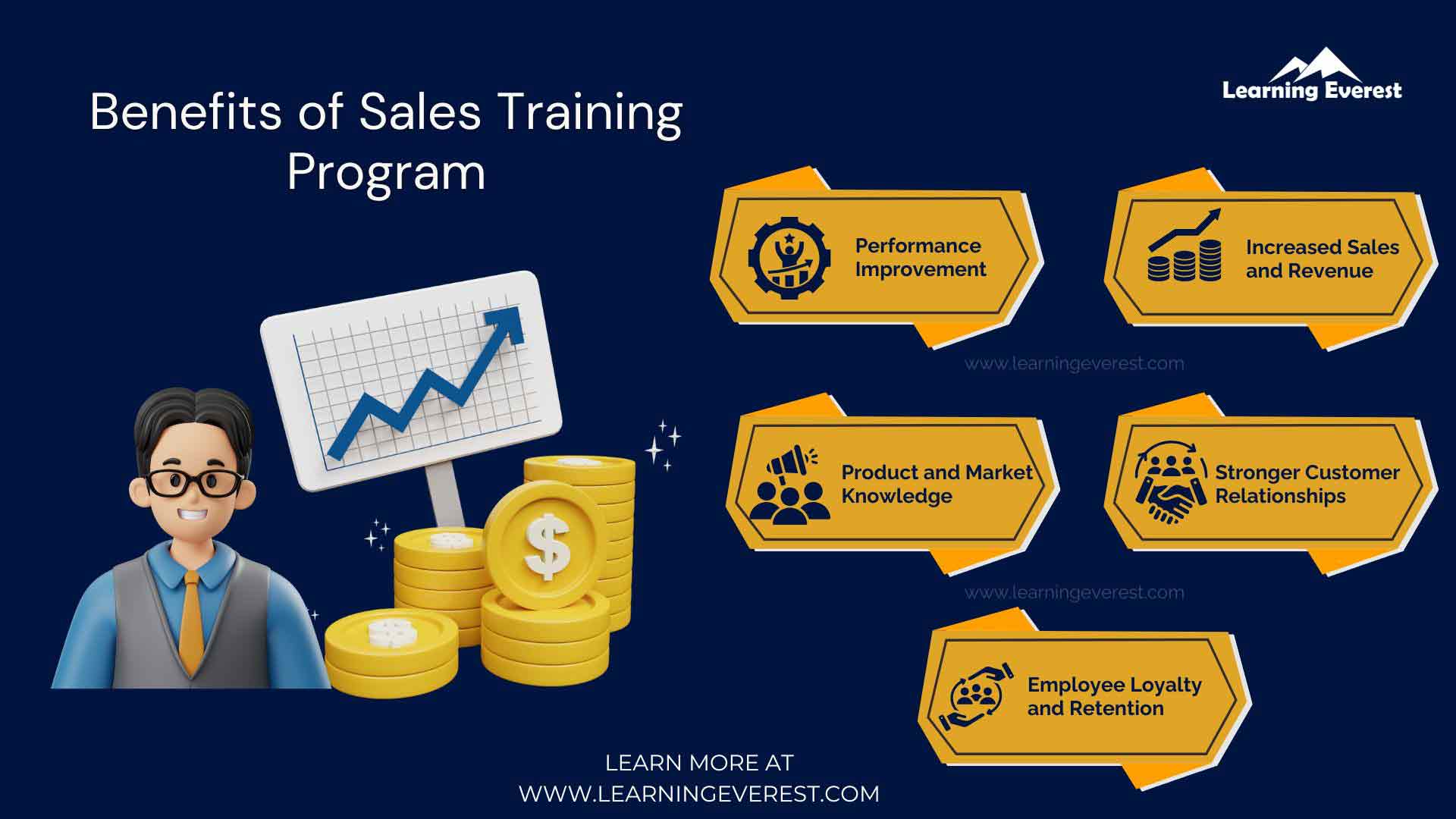
Benefits of Sales Training Program
Performance Improvement
The sales training program helps professionals develop critical skills such as communication, negotiation, persuasion, objection handling, time management, problem-solving, sales technology proficiency, adaptability, etc. enabling employees to identify customer needs and engage in deals with confidence. Studies reveal that “78.6% of organizations having an effective training program are able to meet 100% of their sales targets.” (Source: SmartWinnr). Additionally, sales training programs provide insights into market trends encouraging employees to align their strategies accordingly improving the overall performance.
Increased Sales and Revenue
With improved negotiation skills and the ability to identify high-quality leads, sales professionals will learn to secure better deals and sell more effectively. The improved performance of employees at all levels of the organization encourages elevated sales of products or services to the customers leading to high profitability. Moreover, effective sales training reduces operational inefficiencies and increased spending enabling organizations to lead to long-term financial success.
Enhanced Product and Market Knowledge
Apart from the necessary skills needed to elevate sales, well-structured sales training provides comprehensive knowledge about the product such as the features, uses, unique selling points, and how effectively it answers customer needs. Moreover, the training keeps sales teams updated about the changing market trends and demands along with strategies for analyzing customers’ pulse. The participants also gather insight into portraying their unique position in the market distinguishing them from their competitors.
Stronger Customer Relationships
Sales training plays a crucial role in improving customer relationships by improving communication skills, personalizing customer interactions, equipping with the ability to handle objections professionally, and elevating customer trust.
Employee Loyalty and Retention
Similar to every professional development training, a sales training program enhances employees’ job satisfaction by elevating employee engagement and building a stronger workplace culture.
What are the Steps for Creating a Sales Training Program?
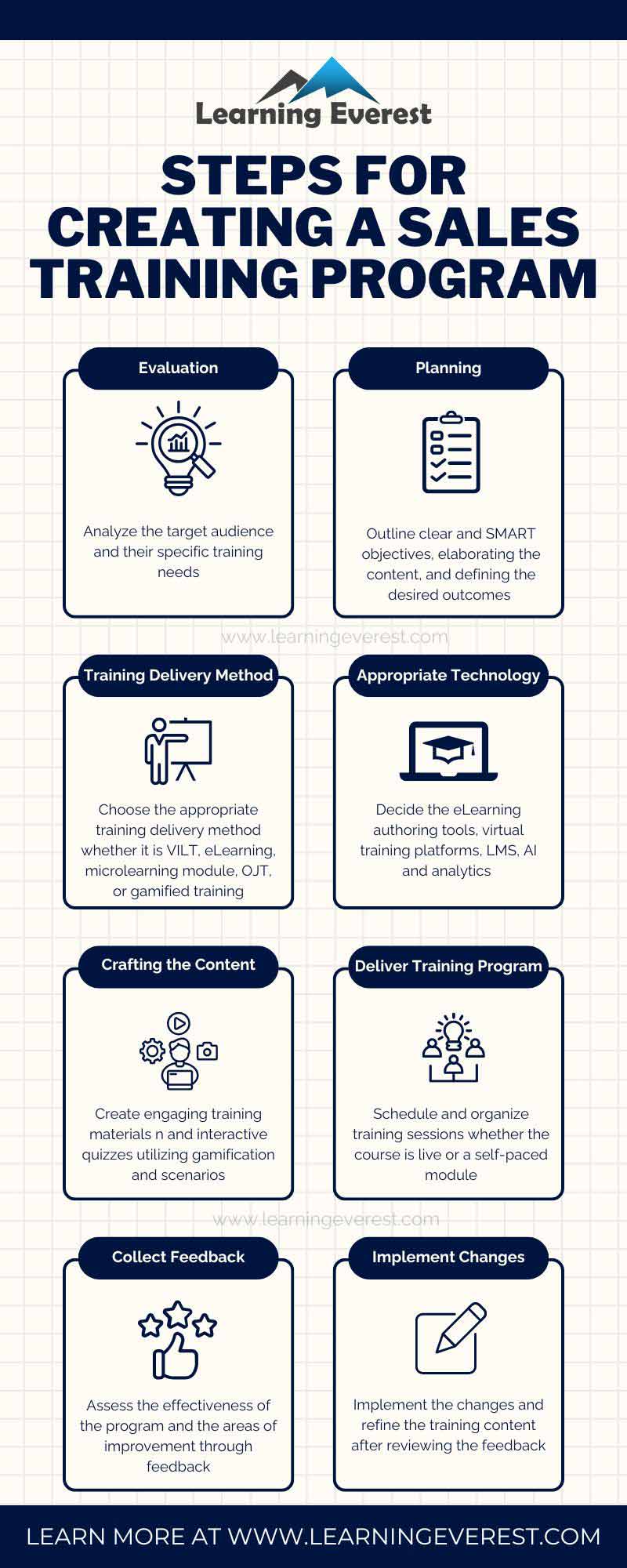
A structured approach to creating a sales training program is essential for maximized outcomes. Before executing a sales training program, learning and development professionals should consider the following steps to create a lasting impact.
Creating a Sales Training Program #Step 1: Evaluation
The first step to creating a sales training program is evaluation which involves analyzing the target audience and their specific training needs. Determining the level of understanding of the audience based on their experience in the field and varying roles along with assessing the team’s strengths, knowledge gaps, and areas of improvement is imperative. In addition, evaluating the market trends and the customer expectations provides a better insight on what should be addressed in the training.
Creating a Sales Training Program #Step 2: Planning
After conducting the evaluation, the next step is to plan the sales training program by outlining clear and SMART objectives, elaborating the content, and defining the desired outcomes the course would have on the learner.
Creating a Sales Training Program #Step 3: Choosing the Training Delivery Method
Before moving on to the content creation, choose the appropriate training delivery method whether it is VILT, eLearning, microlearning module, OJT, or gamified training, based on the extent to which engagement and interactivities are needed. This step impacts the design of content format and structure.
Creating a Sales Training Program #Step 4: Utilizing Appropriate Technology
Once the training delivery method is chosen, the next step is to utilize the right technology to enhance the effectiveness and involvement in the learning process. This involves deciding the eLearning authoring tools, virtual training platforms, LMS, AI and analytics for performance tracking to create an interactive, scalable, and immersive learning experience
Creating a Sales Training Program #Step 5: Crafting the Content
Following choosing the appropriate training delivery method and the right technology, the major step of developing actual training content and designing assessments for ensuring learning effectiveness is performed. Create engaging and relevant training materials for maximized learning retention and design interactive quizzes utilizing gamification and scenarios involving learners along with determining the effectiveness of the training. Crafting the course undergoes various stages of preparing the storyboard, quality check, first draft, and the final course.
Creating a Sales Training Program #Step 6: Deliver the Training Program
The final course is delivered to the learners by scheduling and organizing training sessions whether the course is live or a self-paced module. Apart from that, ensuring that all learners have access to the necessary content and materials is important.
Creating a Sales Training Program #Step 7: Collect and Analyze Feedback
Once the training is delivered, the next critical step is to gather feedback from the participants to assess the effectiveness of the program and the areas of improvement. This can be performed through surveys and questionnaires, one-on-one feedback sessions, observations, and group discussions to measure the learning outcome and the engagement of the learners.
Creating a Sales Training Program #Step 8: Implement Changes and Continuous Improvement
The final step in a sales training program is to implement the changes and refine the training content after reviewing the feedback. Furthermore, establish a culture of continuous improvement through regular updations of the training program.
Conclusion
In a nutshell, creating a well-structured sales training program is essential for organizations to enhance sales performance, improve customer relationships, and drive revenue growth. The key components of an effective sales training program include sales methodologies, customer-centric selling, negotiation, sales process improvement, sales enablement, CRM training, objection handling, and sales technology and tools.
A successful sales training program not only equips employees with essential sales methodologies and customer-centric strategies but also strengthens product knowledge, fosters stronger customer relationships, and boosts employee engagement and retention. By following a strategic approach, starting with evaluation, planning, selecting the right training delivery method, leveraging appropriate technology, developing engaging content, delivering the program effectively, collecting feedback, and continuously refining the training, organizations can ensure that their sales teams remain skilled, motivated, and competitive in the evolving market.
Infographic
Steps For Creating a Sales Training Program
Knowledge Check!
Frequently Asked Questions (FAQs)
What is a Sales Training Program?
A sales training program is a structured program created to equip sales professionals with the knowledge and skills to heighten sales effectiveness, improve customer relationships, and elevate revenue.
What are the Key Components of a Sales Training Program?
The key components covered in an effective sales training program include sales methodologies, customer-centric selling, prospecting, negotiation, sales process improvement, sales enablement, Customer Relationship Management (CRM) training, objection handling, and sales technology and tools.
What are the benefits of a sales training program?
A successful sales training program not only equips employees with essential sales methodologies and customer-centric strategies but also strengthens product knowledge, fosters stronger customer relationships, and boosts employee engagement and retention.
What are the Steps for Creating a Sales Training Program?
Creating a sales training program starts with evaluation, planning, selecting the right training delivery method, leveraging appropriate technology, developing engaging content, delivering the program effectively, collecting feedback, and continuously refining the training.
Live Online Certification Trainings




Our Clients Our Work
