

Effective communication during challenging times transforms workplace culture, enabling teams to face uncertainty easily. Strong interpersonal communication, whether formal or informal, fosters open dialogue in the organization, allowing leadership and employees to navigate the challenges with confidence. But what are the challenging times in the workplace? How does effective communication shape these situations? Keep reading the entire article to gather insights into challenging times, the importance of effective communication during challenging times, and steps to master effective communication for overcoming challenges.
Table of Contents
What are the Major Challenging Times in the Workplace?
Workplaces are not static places but constantly evolving with changing situations that bring forth challenges. The major challenging times in the workplace where effective communication is crucial are organizational changes such as mergers, acquisitions, leadership transitions, and restructurings, creating employee uncertainty and workplace conflicts, crises involving pandemics, natural disasters, financial downturns, etc., high-pressure deadlines, performance issues, technological issues, and employee burnout.
Importance of Effective Communication During Challenging Times
According to the Grammarly report The State of Business Communication, “50% of employees admitted that poor communication has increased their overall stress levels, and 22% have considered looking for a new job due to poor communication.” (Source: Pumble). This stresses the importance of strong communication in the workplace. Effective communication during challenging times is crucial because of the following reasons.
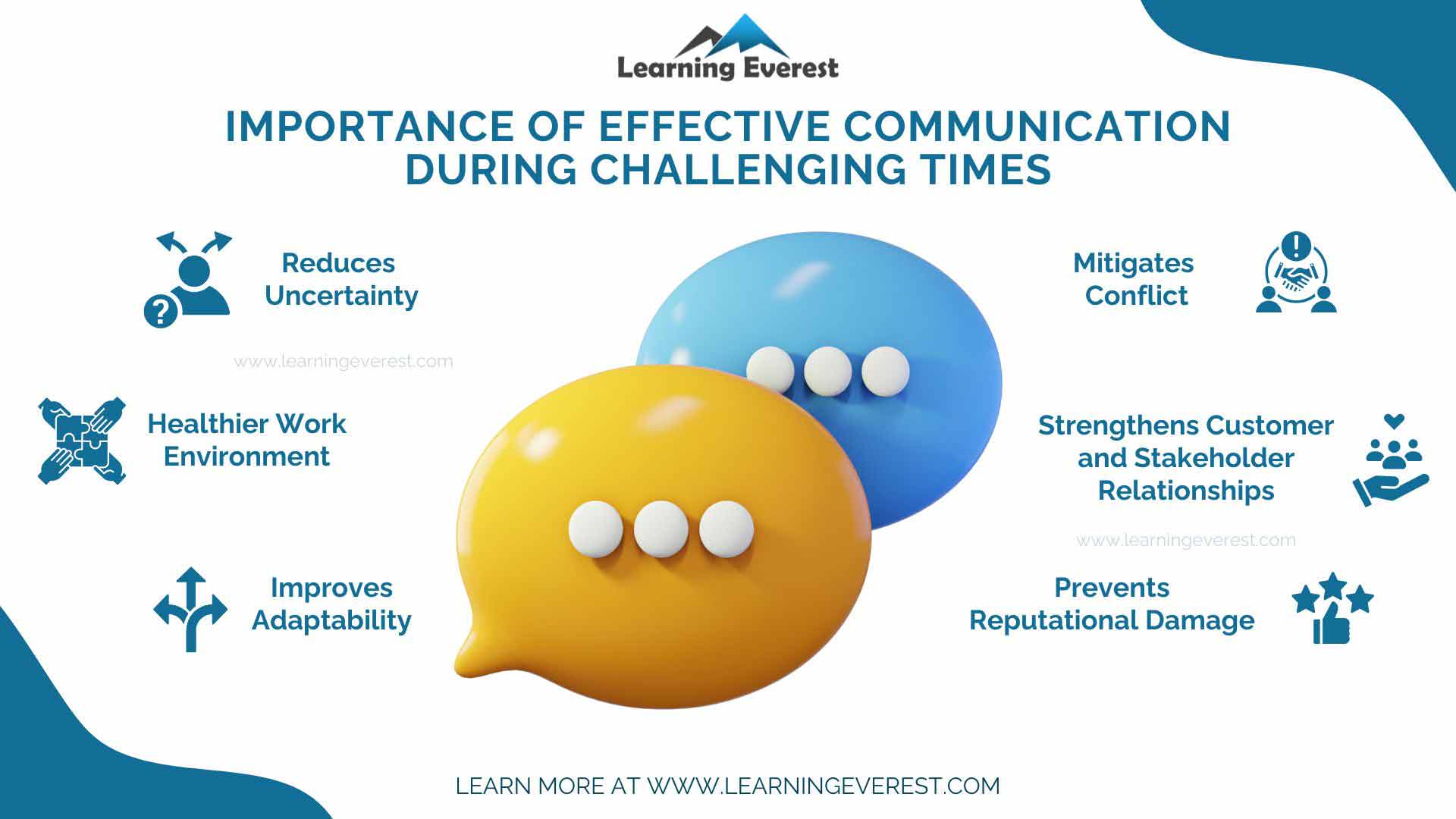
Importance of Effective Communication During Challenging Times
Effective Communication During Challenging Times #Benefit 1: Reduces Uncertainty
During uncertainty associated with organizational or technological changes, effective communication in the form of regular updates from the leadership informs employees on what to expect and the nature of change. Open communication reduces workplace stress and anxiety associated with uncertainty leading to enhanced productivity.
Effective Communication During Challenging Times #Benefit 2: Healthier Work Environment
Effective communication during challenging times maintains a positive and supportive work environment, building trust and stronger connections. Moreover, open communication regarding the ongoing challenge prevents misunderstandings and rumors in the workplace, avoiding anxiety about job security and organizational changes.
Effective Communication During Challenging Times #Benefit 3: Improves Adaptability
In the workplace, adaptability refers to the ability of individuals to respond and adjust to challenging changes and maintain a positive attitude. Effective and transparent communication clarifies the reason for the change to the employees and provides clear guidance to the employees to adapt quickly.
Effective Communication During Challenging Times #Benefit 4: Mitigates Conflict
Challenging times are often accompanied by misunderstandings and tensions that escalate without effective communication leading to conflicts. Effective communication during challenging times can prevent and resolve the issues fostering clarity, trust, and collaboration. It further addresses small misunderstandings at the initial phase preventing them from being unaddressed and resolves the issues before they grow.
Effective Communication During Challenging Times #Benefit 5: Strengthens Customer and Stakeholder Relationships
Challenging times such as acquisitions, leadership transitions, or even natural calamities create uncertainty concerning the business in customers and other stakeholders such as clients and investors. Effective communication is vital in fostering trust and answering expectations ensuring clarity, transparency, and reassurance from the organizations.
Effective Communication During Challenging Times #Benefit 6: Prevents Reputational Damage
During challenging times, organizations are at risk of facing negative publicity due to speculations and false narratives. Ensuring transparency in communication through clear, consistent messaging allows organizations to control the narratives reinforcing brand reputation and portraying accountability.
How to Master Effective Communication During Challenging Times
Understanding the vitality of effective communication during challenging times, it is imperative to practice the steps to master the skill. Organizations should implement these steps in their operations to ensure the leadership and employees are equipped with communication skills that would help them stay positive and overcome challenging situations.
Conduct Regular Communication Training
Offering regular communication training for employees equips them with the ability to not only speak clearly and confidently but also understand the importance of active listening, and comprehend non-verbal cues, thereby encouraging collaboration and reducing misunderstanding in the team. Individuals become proficient by learning how to articulate ideas and expectations reducing misunderstandings and improving organizational relationships.
Train Managers and Leaders
Employees often look to the leadership for efficient decision-making and guidance. Effective communication during challenging times from the leadership and managers. Conducting training programs for leadership enables them to be equipped to offer clear guidance and accurate updates to all the stakeholders and encourage meaningful dialogue. Moreover, it provides them with the knowledge to establish professionalism in communication such as using storytelling, lightening situations with humor, adaptability to adjust communication depending on personalities, and assigning roles and responsibilities for crisis response.
Practice Emotional Intelligence
“Emotional intelligence has a 58% influence on job performance.” (Source: Talentsmart EQ). Possessing emotional intelligence provides individuals with the ability to communicate effectively even in uncertain situations. Enhancing self-awareness, improving emotional regulation, and fostering empathy, inculcates in employees the skill to communicate with clarity and confidence even during challenging situations. Individuals, including leadership and employees when possessed with emotional intelligence, utter thoughtful responses in situations preventing emotional outbursts that could escalate into conflicts.
Adapt the Communication Style
Adapting the communication style to suit the respective situation is a crucial step in mastering effective communication during challenging times. A one-size-fits-all model of communication can lead to elevated issues, misunderstandings, resistance, and conflict. When the leadership is viewed as flexible communicators, it builds trust and encourages open dialogue among the employees resulting in enhanced cooperation.
Develop Crisis Communication Skills
Another step to mastering effective communication during challenging times is to promote individuals developing crisis communication skills. Crisis communication skills include the ability to effectively convey information and maintain trust even during high-pressure or uncertain situations. The skills encompass clarity and transparency, rapid and proactive responses, consistent messaging, and adaptability. Possessing crisis communication skills reduces panic and prevents misinformation strengthening trust and credibility among employees.
Improve Written Communication
Every formal organizational communication relies on written mode as it serves as the source of evidence and further references. Strong written communication prevents misinterpretation and speculation encouraging transparency and effective workflow. During challenging times, offering clear and concise written communication in a positive structured manner prevents panic and unnecessary chaos in the workplace. However, deciding upon the platform or channel for written communication is also crucial.
Conclusion
In short, effective communication during challenging times is essential in every workplace to bounce back against uncertainty. The major challenging times in the workplace where effective communication is crucial are mergers, acquisitions, leadership transitions, and restructurings, creating employee uncertainty and workplace conflicts, crises involving pandemics, natural disasters, financial downturns, etc. It is important to maintain effective communication during challenging times as it reduces uncertainty, maintains a healthier work environment, improves adaptability, mitigates conflicts, strengthens customer and stakeholder relationships, and prevents reputational damage.
Organizations can promote certain steps such as conducting regular communication training, offering training to managers and leaders, enabling employees to practice emotional intelligence, adapting to different communication styles, developing crisis communication skills, and improving written communication. It is recommended that both leadership and employees understand the importance of effective communication in workplaces to face and approach challenging situations.
Infographic
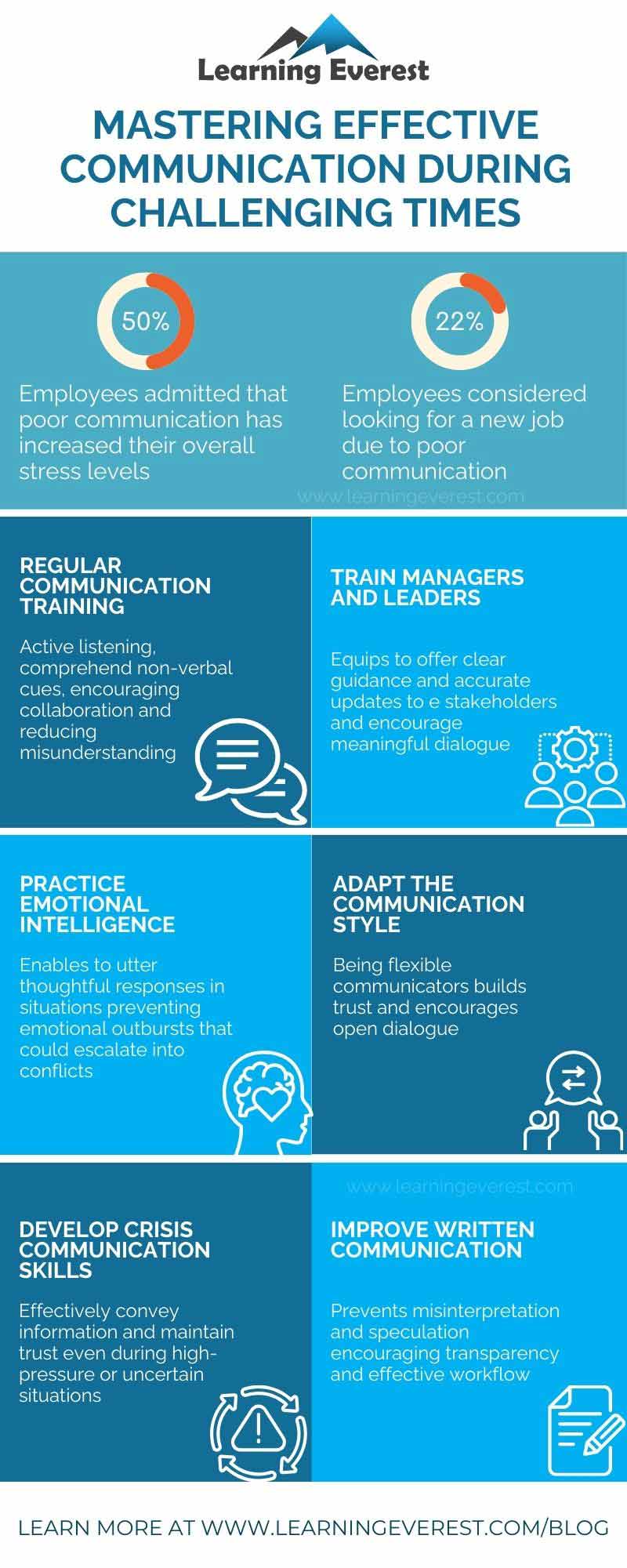
Mastering Effective Communication During Challenging Times
Knowledge Check!
Frequently Asked Questions (FAQs)
What are the major challenging situations in the workplace?
The major challenging times in the workplace where effective communication is crucial are organizational changes such as mergers, acquisitions, leadership transitions, and restructurings, creating employee uncertainty and workplace conflicts, crises involving pandemics, natural disasters, financial downturns, etc., high-pressure deadlines, performance issues, technological issues, and employee burnout.
What is the importance of effective communication during challenging times?
The importance of maintaining effective communication during challenging times is that it reduces uncertainty, maintains a healthier work environment, improves adaptability, mitigates conflicts, strengthens customer and stakeholder relationships, and prevents reputational damage.
How to master effective communication during challenging times?
Organizations can promote certain steps such as conducting regular communication training, offering training to managers and leaders, enabling employees to practice emotional intelligence, adapting to different communication styles, developing crisis communication skills, and improving written communication
Live Online Certification Trainings




Our Clients Our Work
