

Cross-functional collaboration is a vital requirement, with “over two-thirds (66%) of employees work in an organization that requires them to collaborate with coworkers differently today” (Source: Training Industry). With immense benefits to the organization and its stakeholders, cross-functional collaboration enhances workplace dynamics.
Table of Contents
The following paragraphs delve into cross-functional collaboration in detail, outlining what it is, the reasons for implementing it, common challenges, and strategies for effective implementation. Read on!
What is Cross-Functional Collaboration?
Cross-functional collaboration refers to the business process in which members from different teams, departments, or areas of expertise work together and collaborate to achieve a common goal. This collaborative activity encourages open dialogue and innovation where individuals share their viewpoints, knowledge, skills, and resources to attain creative solutions. For instance, cross-functional collaboration is useful in cases of new product development or project management. With enhanced collaboration, the strengths and unique perspectives of every individual are brought forward, offering diverse expertise to fulfill the outcome.
Why is Cross-Functional Collaboration Important in the Workplace?
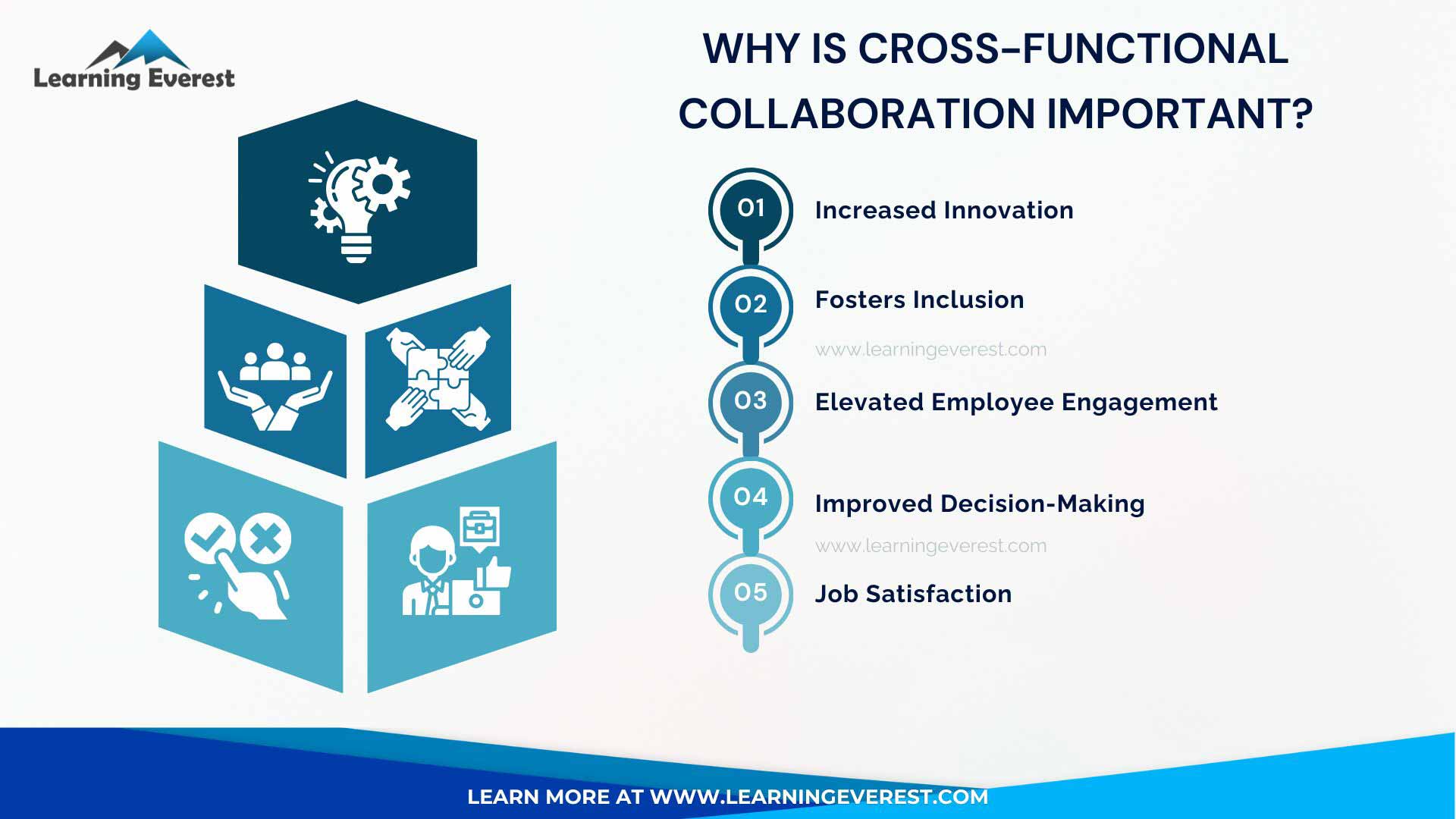
Cross-functional collaboration, which encourages individuals and teams to work together across departments, offers significant benefits for the organization. These benefits include:
Why is Cross-Functional Collaboration Important
Increased Innovation
When individuals from different roles and departments collaborate toward a common goal, they bring forth diverse ideas and perspectives, fueling innovation, creativity, and overall effectiveness. “60% of employees who engage in collaborative work report that it sparks their innovation” (Source: Deloitte). Innovation is a powerful driver of success, as the more innovative an organization is, the stronger its position in the job market. Furthermore, it breaks the ‘silos’ and turns ideas into practical solutions.
Fosters Inclusion
Bringing together professionals from different roles, departments, and experiences, cross-functional collaboration fosters inclusion. It further encourages equal contribution from every individual, discouraging biases and creating a culture of mutual respect and shared goals.
Elevated Employee Engagement
Cross-functional collaboration elevates employee engagement by seeking each individual’s voice within the organization. When employees feel heard and valued, it fosters a deeper sense of commitment, recognition, and trust. motivates them to fully engage with their work and step outside their comfort zones to make meaningful contributions to the organization’s success.
Improved Decision-Making
By bringing together a wide range of perspectives and expertise, cross-functional collaboration enhances decision-making. With diverse opinions and perspectives, teams can analyze ideas more thoroughly, eliminating biases, and make well-informed decisions that consider multiple aspects of a situation.
Job Satisfaction
Cross-functional collaboration offers employees the opportunity to fully immerse themselves in the process, actively exchange ideas by providing an inclusive environment. This increased engagement and innovation foster a sense of job satisfaction, allowing employees to feel more fulfilled and content in their roles.
What are the Challenges in Cross-Functional Collaboration?
According to the Gallup State of the Global Workplace Report, “41% of employees find it more challenging to collaborate across departments than within their teams.” Amidst this wide range of benefits, certain factors pose significant challenges in cross-functional collaboration, such as:
Differences within the Teams
Different teams often vary in their roles, communication styles, and work cultures, which can present significant challenges to effective collaboration. Furthermore, differences in terms of schedules, break times, and levels of contribution make it difficult for teams to work cohesively, hindering coordination and creating obstacles in achieving shared goals.
Power Struggles
Cross-functional collaboration can sometimes lead to power struggles, hindering productivity and eroding trust. When team members from different departments hold similar roles or overlapping responsibilities, it can create uncertainty about authority and position, resulting in conflicts over hierarchical status within the team.
Preconceived Notions
Professionals may hold prior perceptions about other teams or their work styles, which can sometimes be shaped by past experiences or interdepartmental competition. These biases can hinder trust and reduce the willingness to collaborate effectively, ultimately affecting the team’s ability to contribute to the outcome.
Resource Allocation
Improper allocation of resources or a lack of sufficient resources can pose significant challenges to cross-functional collaboration. For instance, if certain teams receive more support while others are overlooked, it creates an imbalance that can lead to frustration, reduced productivity, and questioning the effectiveness of collaborating.
Accountability
With responsibilities spread across multiple teams and roles, accountability can become unclear in cross-functional collaboration. This lack of clarity on accountability may lead to essential duties going unaddressed or no one taking ownership of key actions, causing confusion and delays in the process.
Strategies to Enhance Workplace Dynamics with Cross-Functional Collaboration
Given the challenges that can arise, implementing strategies to ensure effective cross-functional collaboration is essential. Here are some tips organizations can adopt to foster successful collaboration across teams.
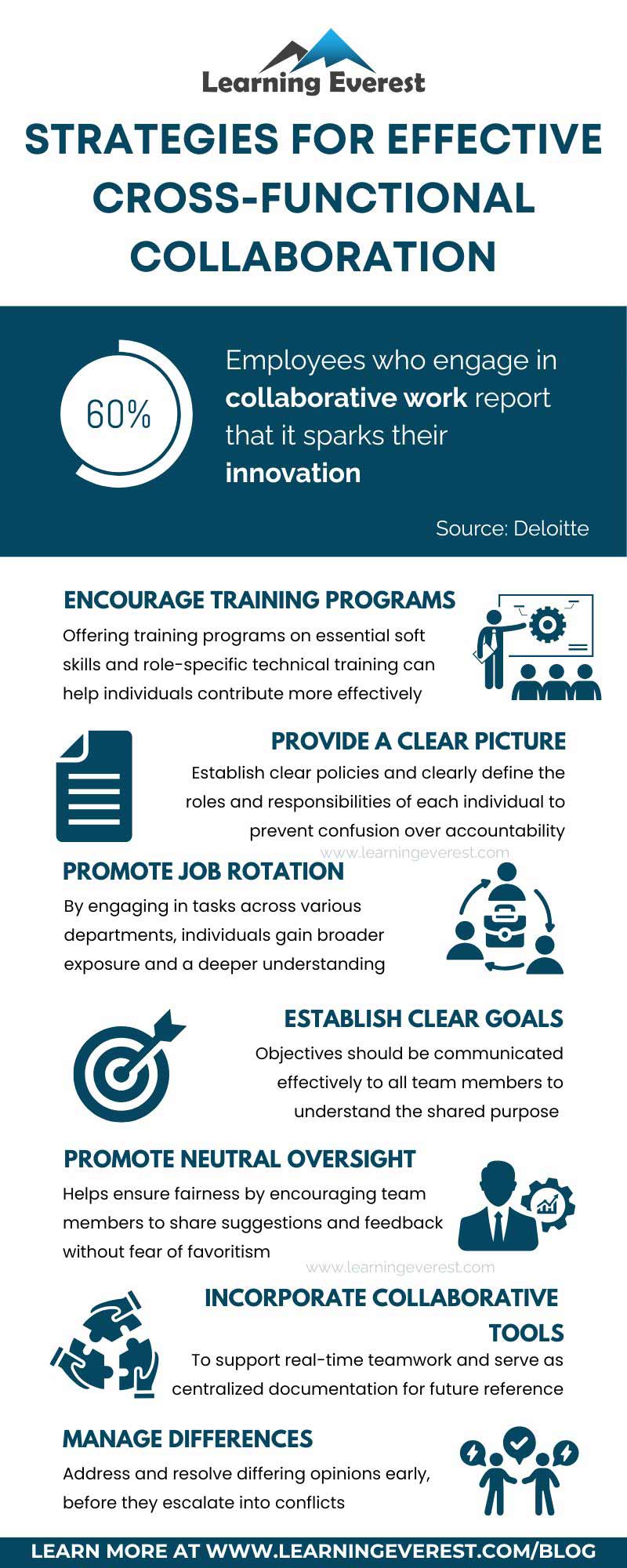
Encourage Training Programs
To ensure effective cross-functional collaboration, professionals must be equipped with the right skills, achieved through targeted training programs. Offering training programs on essential soft skills such as communication, collaboration, decision-making, empathy, emotional intelligence, and conflict resolution is a major strategy to yield maximized outcomes. In addition, role-specific technical training can help individuals contribute more effectively within their area of expertise.
Provide a Clear Picture
Before promoting cross-functional collaboration, organizations should establish clear policies and clearly define the roles and responsibilities of each individual. This clarity helps prevent confusion over accountability, ensuring smoother and more effective collaboration.
Promote Job Rotation
Inculcating a culture of job rotation is an effective strategy to enhance cross-functional collaboration. By engaging in tasks across various departments, individuals gain broader exposure, a deeper understanding of different functions, and build stronger interdepartmental relationships, breaking down silos.
Establish Clear Goals
Establishing clear goals and defining the expected outcomes is essential before initiating cross-functional collaboration. These objectives should be communicated effectively to all team members to understand the shared purpose and the collaborative effort to be put forward.
Promote Neutral Oversight
During cross-functional collaboration, it is desirable to appoint a neutral person to oversee the process. Since cross-functional projects involve individuals from various departments, there’s potential for conflicts over the positions that are being upheld and the decisions being undertaken. A neutral overseer helps ensure fairness by encouraging team members to share suggestions and feedback without fear of favoritism or bias.
Incorporate Collaborative Tools
Utilizing shared collaborative tools such as Docs, Sheets, and Drive can significantly enhance cross-functional collaboration. These platforms not only support real-time teamwork but also serve as centralized documentation for future reference. This ensures continuity, even when team members change or transition roles.
Manage Differences Proactively
Another key strategy to effective cross-functional collaboration is to address and resolve differing opinions early, before they escalate into conflicts. When individuals bring diverse perspectives and ideas, it can sometimes lead to disagreement. To maintain team productivity, it is necessary to proactively manage these differences.
Conclusion
In a nutshell, cross-functional collaboration is essential for uniting individuals toward a shared goal. It fosters innovation, promotes inclusivity, enhances employee engagement, improves decision-making, and boosts job satisfaction. While challenges such as team differences, power struggles, preconceived notions, unclear resource allocation, and lack of accountability may arise, these can be addressed through thoughtful strategies. Implementing training programs, providing clarity before collaboration begins, encouraging job rotation, setting clear goals, assigning neutral oversight, and proactively managing differences can all contribute to successful and effective cross-functional collaboration that enhances workplace dynamics.
Infographic
Strategies For Effective Cross-Functional Collaboration
Knowledge Check!
Frequently Asked Questions (FAQs)
What is cross-functional collaboration?
Cross-functional collaboration refers to the business process in which members from different teams, departments, or areas of expertise work together and collaborate to achieve a common goal.
Why is cross-functional collaboration important?
Cross-functional collaboration fosters innovation, promotes inclusivity, enhances employee engagement, improves decision-making, and boosts job satisfaction.
Live Online Certification Trainings




Our Clients Our Work
