

Conflict resolution skills are integral to every professional to solve conflicts as they are inevitable in any workplace or personal setting but resolving them is necessary. To understand the seven vital conflict resolution skills, the reasons for employees to possess the skills, and improve conflict resolution skills through training, delve into the entire blog.
Table of Contents
What are Conflict Resolution Skills?
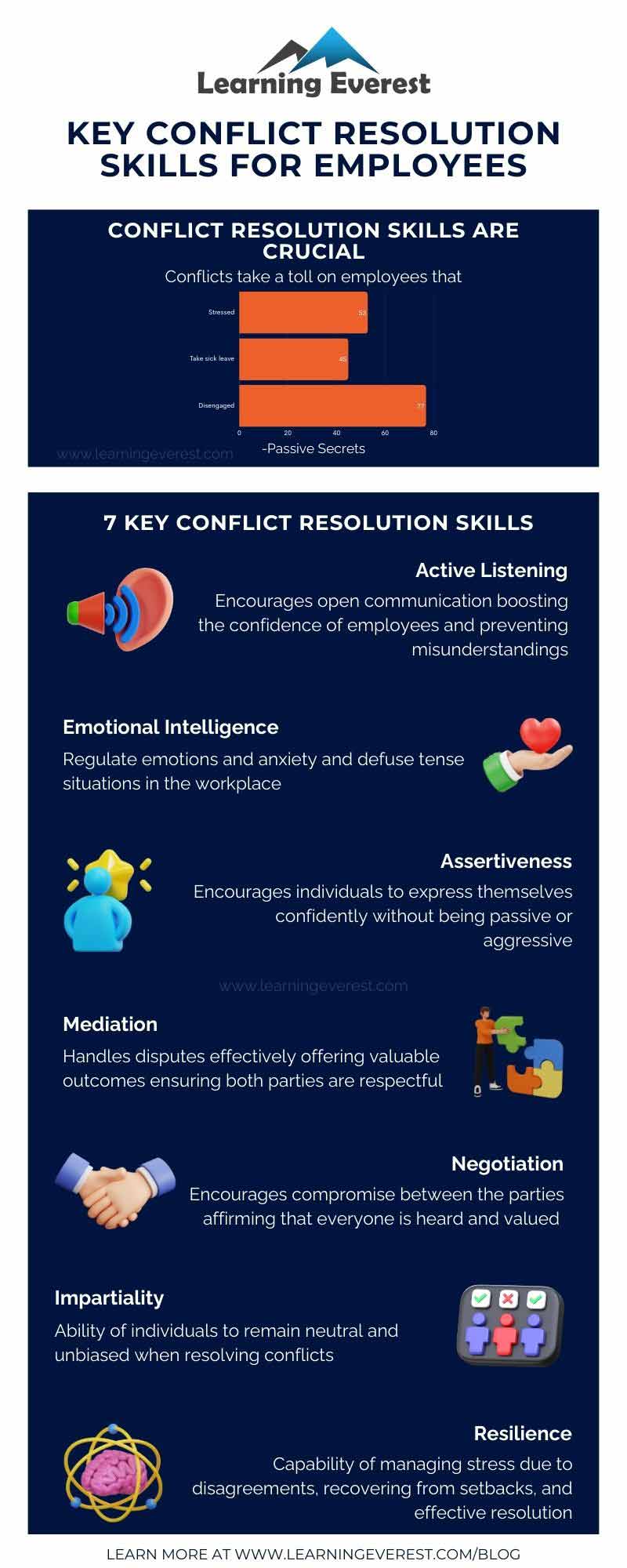
Do you know that approximately “85% of employees face conflict in their roles” and these “conflicts take a toll on employees that 53% feel stressed, 45% take sick leave and 77% are disengaged?” (Source: Passive Secrets). The common causes for conflicts in the workplace include individual differences, conflicting goals and preferences, and misunderstandings. This highlights the importance of possessing conflict-resolution skills which is the ability to manage and resolve disagreements constructively. Possessing these skills enables individuals to handle challenges and conflicts without leading them to long-term disputes, negotiate effectively, and undertake mutually beneficial solutions.
Why Should Employees Possess Conflict Resolution Skills?
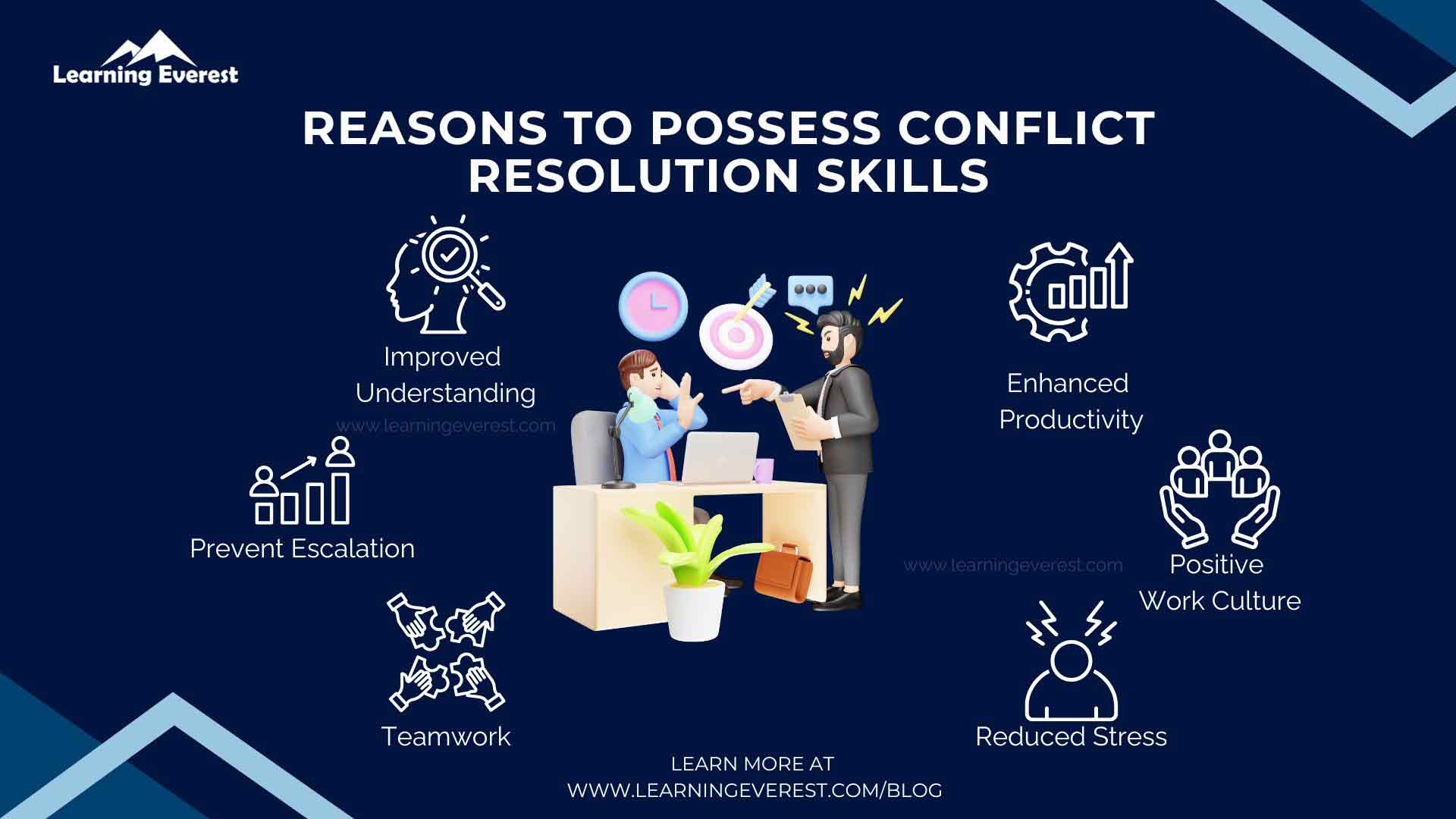
When employees and leaders possess conflict-resolution skills, the overall efficiency of the organization is strengthened by building an effective workforce. Here’s why employees should possess conflict resolution skills.
Positive Work Environment
Conflict resolution skills play a pivotal role in creating a positive work environment by 00addressing the issues swiftly, fairly, and without bias fostering trust and open communication in the organization. This enhances the job satisfaction of employees as employees promote a culture of mutual understanding rather than confrontation.
Reasons to Possess Conflict Resolution Skills
Prevent Escalation
Unresolved conflicts escalate to higher degrees negatively impacting the workflow. With the right skills, employees can encourage early intervention and quick resolution of these conflicts and ensure that policies are applied fairly in the organization.
Teamwork
Collaboration and teamwork are essential qualities of every workforce. However, internal conflicts and biases can disrupt the smooth interactions within the team. Possessing conflict resolution skills enhances teamwork and benefits the organization.
Productivity
When employees engage in prolonged disputes, it demotivates them from work and can be stressful. Conflict resolution skills promote a culture where concerns are addressed enabling employees to work harmoniously and complete the tasks with elevated efficiency.
Reduced Stress
A workplace that encounters conflicts can create tension, frustration, and anxiety impacting the well-being of employees. Addressing the conflicts effectively reduces workplace stress and creates a relaxed and stress-free environment.
Minimized Disruptions
Effective skills for the employees and leadership encourage open dialogue between them and ensure disagreements are addressed fostering a culture of trust and cooperation. This further equips them to handle disagreement smoothly preventing unnecessary interruptions at work.
7 Integral Conflict Resolution Skills for Employees
Now, the question remains on which are these integral conflict resolution skills. Let’s have a look at the skills.
Active Listening
Active listening is a vital conflict resolution skill needed to be possessed by every individual benefitting their personal and professional lives. Active listening encourages open communication boosting the confidence of employees in expressing themselves and preventing misunderstandings. In addition, acknowledging the viewpoints of every party prevents conflicts from escalating into major issues.
Emotional Intelligence
Emotional Intelligence is the ability of individuals to recognize and understand their own emotions as well as that of others. It possesses five key components namely self-awareness, self-regulation, motivation, empathy, and social skills preventing the sudden reactive behavior of employees and reducing misunderstandings at work. With emotional intelligence skills, employees can regulate emotions and anxiety and defuse tense situations in the workplace fostering an environment of trust and respect.
Assertiveness
“Assertiveness is the ability to honestly express your opinions, feelings, attitudes, and rights, without undue anxiety, in a way that doesn’t infringe on the rights of others.” It is a conflict resolution skill that encourages individuals to express themselves confidently without being passive or aggressive. Through open communication and mutual respect, it foster trust and understanding leading to balanced conflict resolution.
Mediation
Mediation is a crucial conflict resolution skill that involves constructive discussions between the parties to arrive at a mutually acceptable decision. Possessing mediation skills ensures unbiased resolution and prevents escalation of disagreements. Mediation is the best and most effective strategy to handle disputes effectively in the workplace offering valuable outcomes while ensuring both parties remain respectful in their attitudes.
Negotiation
Similar to mediation, negotiation is also an essential skill required for employees and is the process of discussing conflicting ideas and thoughts thereafter reaching a mutually acceptable solution. Negotiation encourages compromise between the parties affirming that everyone is heard and valued promoting a cooperative and productive work environment.
Impartiality
For every conflict resolution involving mediation and negotiation, impartiality is needed which is the ability of individuals to remain neutral and unbiased when resolving conflicts. Rather than being subjective and partial in making decisions that escalate the conflicts, focusing on the facts, evidence, and logic promotes reaching fair solutions.
Resilience
Resilience is the ability of individuals to adapt to challenging circumstances, enabling them to overcome adversities and outgrow. These skills make the employees capable of managing stress due to disagreements, recovering from setbacks, and effective resolution. Resilience offers individuals with situational awareness to foresee conflicting events and adopt strategies to prevent them from occurring supporting professional growth.
Role of Training in Improving Conflict Resolution Skills
To develop these skills to handle disagreements in the workplace constructively and contribute to a productive workforce, structured training is beneficial. Workplace training designed with real-life scenarios, case studies, role plays, simulations, and personalized learning helps employees improve their communication, manage emotions, increase confidence, and develop problem-solving skills. When designing and developing the training, organizations should consider the specific needs and skill expertise of the participants and provide ongoing support to the employees.
The training can incorporate different modalities such as in-person workshops, eLearning courses, coaching, webinars, discussions, and peer learning delivered online and offline promoting an environment of positive work culture. Conflict resolution skills training is an effective investment for individual and organizational success as well-trained employees can handle conflicts effectively by building confidence and teamwork.
Conclusion
In a nutshell, conflict-resolution skills are the ability to manage and resolve disagreements constructively and is essential to be possessed by every employee. The seven integral conflict resolution skills are active listening, emotional intelligence, assertiveness, mediation, negotiation, impartiality, and resilience. It is important to possess a positive work environment, prevent escalation, teamwork, productivity, reduced stress, and minimized disruptions. To improve conflict resolution skills of the employees, providing training is essential utilizing different modalities such as simulations, scenarios, in-person workshops, eLearning courses, coaching, webinars, discussions, and peer learning. Organizations should offer relevant training to the employees and the leadership to enhance conflict resolution skills preventing escalation of the issues and reducing workplace stress promoting an environment of continuous growth.
Infographic
Key Conflict Resolution Skills for Employees
Knowledge Check!
Frequently Asked Questions (FAQs)
What are conflict resolution skills?
Conflict-resolution skills are the ability to manage and resolve disagreements constructively. Possessing these skills enables individuals to handle challenges and conflicts without leading them to long-term disputes, negotiate effectively, and undertake mutually beneficial solutions.
Why should employees possess conflict resolution skills?
Employees should possess conflict resolution skills for fostering a positive work environment, prevent escalation, teamwork, productivity, reduce stress, and minimized disruptions.
What are 7 key conflict resolution skills?
The seven integral conflict resolution skills are active listening, emotional intelligence, assertiveness, mediation, negotiation, impartiality, and resilience.
Live Online Certification Trainings


Our Clients Our Work
