

Aviation industry training fosters professionals with skills and knowledge for safety aircraft operations and equips them to meet the demands of the industry. In order to maintain the standards of the sector and ensure sound management of every situation, aviation industry training is vital.
Table of Contents
The upcoming paragraphs discuss in detail the need for aviation industry training, the areas where training is offered, and innovative training trends.
Aviation Industry Training: The Need
Aviation industry training is crucial for equipping professionals across various roles in the aviation sector, including pilots, cabin crew, safety and security, technicians, and ground staff, with the role-specific and general skills to excel in their roles. The training enhances the safety and compliance knowledge of employees to ensure adherence to stringent international aviation regulations. Moreover, the training drives operational excellence in strengthening performance and boosts customer-centric skills such as emotional intelligence, excellent communication skills, and problem-solving.
The workforce is prepared to meet new challenges and manage crises by imparting a mindset of resilience to navigate uncertainties. In this regard, the training fosters innovation and contributes to the growth and sustainability of the aviation industry.
Areas of Aviation Industry Training
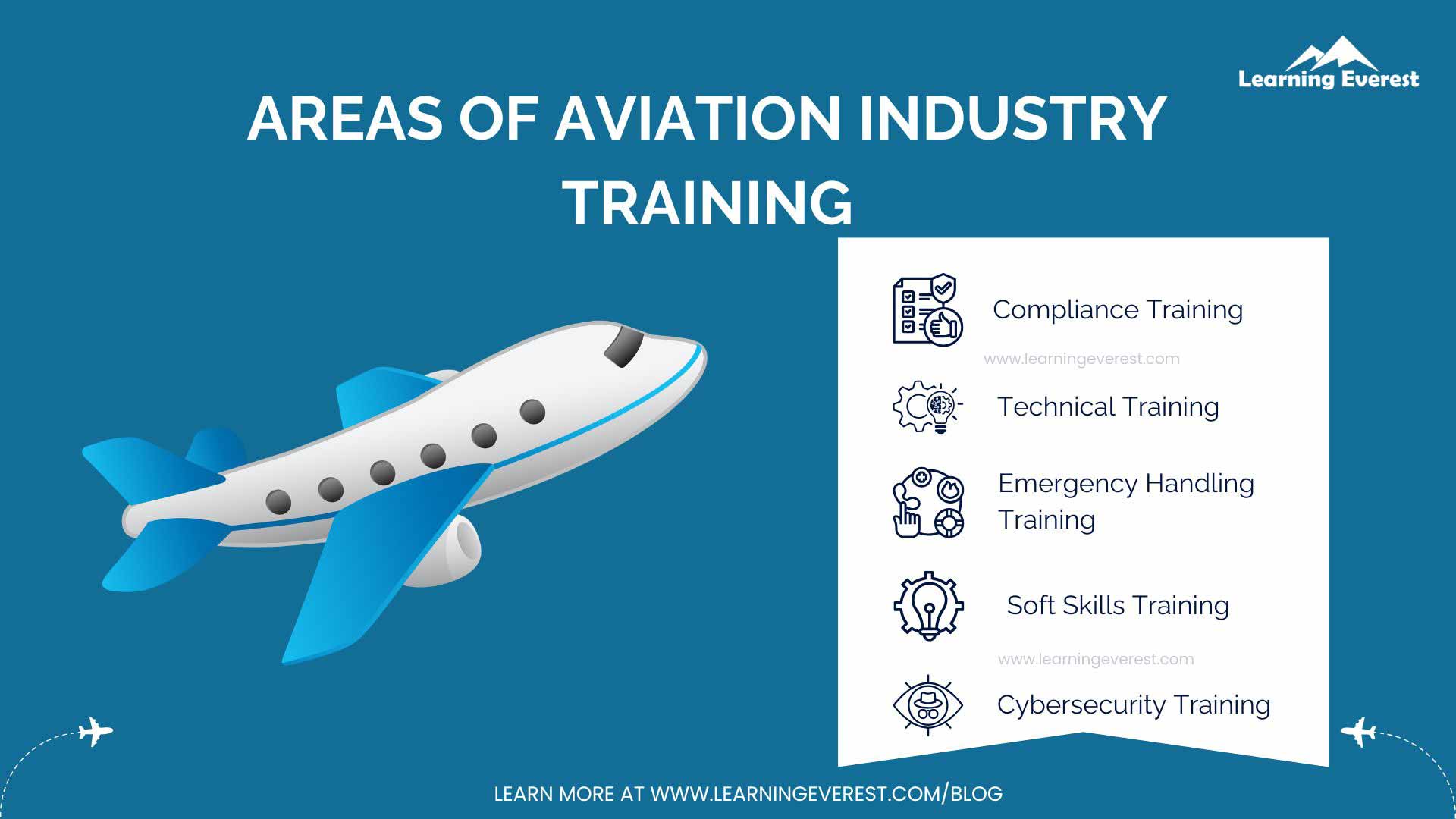
The aviation industry requires diverse areas of training programs to prepare employees for complex work situations. The areas of training focus on addressing the challenges of the aviation industry and ensuring the smooth functioning of training. The aviation industry training areas are:
Areas of Aviation Industry Training
Compliance Training
Compliance training aims to equip professionals with insights into safety protocols, regulatory requirements, and ethical standards enabling them to adhere to international, national, and organizational regulations. Upholding the policies and ethical practices minimizes risks, avoids legal penalties, and promotes a culture of organizational safety.
Technical Training
Aviation industry training involves technical training to develop the skills of employees in managing and operating aviation systems and equipment. It includes diagnosing the aircraft parts and issues, aircraft maintenance, and routine, and emergency repairs, if any. The training stresses more on offering hands-on expertise in addressing technical challenges with precision and efficiency.
Emergency Training
The aviation industry faces innumerable emergencies bringing forth the necessity of emergency training. The training equips employees with skills to handle unexpected, hazardous situations and medical emergencies with confidence. There can be potential instances of fires, turbulence, etc. which require a thorough knowledge of performing evacuation procedures, first aid, and use of emergency equipment.
Soft Skills Training
Similar to technical training, professionals need to possess the necessary soft skills in handling various roles and interacting with customers. The skills to be enhanced include effective communication, teamwork, conflict resolution, adaptability, and emotional intelligence. Offering soft skills training ensures effective interaction and improves the overall performance of the employees leading to a positive work environment
Cybersecurity Training
Cybersecurity training is essential to protect digital technologies in the aviation sector from cyber threats. The training equips the professionals with skills to identify threats, implement secure measures to protect against cyberattacks, safe handling of personally identifiable information of the customers, and judicious use of digital technologies.
Best Practices for Innovative Aviation Industry Training
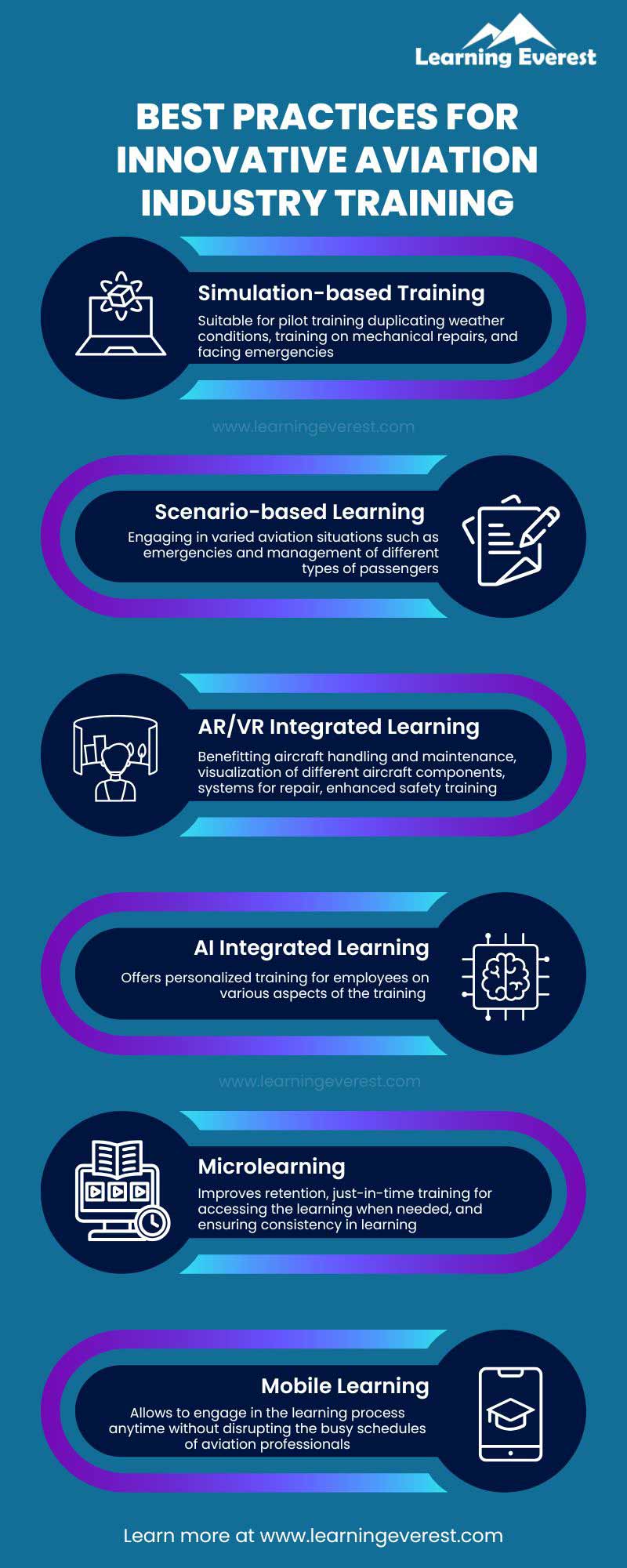
Aviation industry training involving modern tools offers advanced solutions to the training needs in the sector. These innovations enable professionals to practice and have hands-on expertise in a risk-free environment. Some innovative training trends offering the best outcomes in the aviation industry include:
Simulation-based Learning
Simulations are the best way to practice hands-on as it offers a controlled environment mirroring real-life condition without fearing the probable outcomes. In aviation industry training, simulations are suitable for pilot training duplicating weather conditions, training on mechanical repairs, and facing emergencies. This method has applications in preparing professionals on preparedness to face real situations promoting engaged learning by letting learners explore through the training content.
Scenario-based Learning
Scenarios immerse the participants in real-world situations enabling them to utilize their insights in practical complexities. The training is most suitable for emergency training by offering participants knowledge on engaging in varied aviation situations such as emergencies and management of different types of passengers. These situations offer a realistic experience to the learners and are beneficial for crisis management and soft skills training.
AR/VR Integrated Training
Augmented Reality and Virtual Reality are engaging learning pathways that close-to-real situations to enhance the training experience. AR/VR integrated training offers immersive and engaging training experiences that create realistic simulations benefitting aircraft handling and maintenance, visualization of different aircraft components and systems for repair, enhanced safety training, and offering an engaging platform for skill development and training.
AI Integrated Learning
AI integration in the training process offers personalized training for employees on various aspects of the training such as compliance training, technical training, and cybersecurity training. AI contributes significantly to gathering data-driven insights on various learning needs and preferences, offering real-time feedback to the participants, providing automated assessments and tests reinforcing learner knowledge, and Natural Language Processing (NLP) for assisting learners with communication and language skills.
Microlearning
Microlearning is the process of breaking down content into small, fragmented segments or chunks to deliver impactful content. The training can span around a time period of a maximum of ten minutes addressing one topic at a time. The training is beneficial for aviation professionals to gather insights on specific content presented as easily digestible sessions. Apart from being quick and easy to learn, the other merits of microlearning in aviation training are improved retention, just-in-time training for accessing the learning when needed, and ensuring consistency in learning.
Mobile Learning
Mobile learning is largely preferred by professionals due to accessibility and flexibility options offered by it. M-learning allows learners to engage in the learning process anytime without disrupting the busy schedules of aviation professionals. Moreover, the learners can gather real-time updates on various aspects of the training utilizing mobile learning. Utilizing mobile learning has the benefits of accessibility and flexibility, higher completion rates, effective retention of knowledge, scope for enhanced personalization, and continuous learning. Similar to microlearning, mobile learning offers just-in-time learning opportunities for the learners.
Conclusion
To summarize, aviation industry training equips professionals across various roles in the aviation sector, including pilots, cabin crew, safety and security, technicians, and ground staff, with skills and knowledge to excel in their roles. The need for training is to drive operational excellence and boost customer-centric skills such as emotional intelligence, excellent communication skills, and problem-solving. The major areas addressed in aviation industry training are compliance training, technical training, emergency training, soft skills training, and cybersecurity training.
The best practices for innovative aviation industry training include simulation-based learning, scenario-based learning, AR/VR Integrated learning, AI-integrated learning microlearning, and mobile learning. It is recommended that aviation industry training focusing on different innovative solutions can yield better retention of knowledge and skills for the learners.
Infographic
Best Practices for Innovative Aviation Industry Training
Knowledge Check!
Frequently Asked Questions (FAQs)
What is the need for aviation industry training?
The training enhances the safety and compliance knowledge of employees to ensure adherence to stringent international aviation regulations. Moreover, the training drives operational excellence in strengthening performance and boosts customer-centric skills such as emotional intelligence, excellent communication skills, and problem-solving.
What are the areas under aviation industry training?
The major areas addressed in aviation industry training are compliance training, technical training, emergency training, soft skills training, and cybersecurity training.
What are the best practices to be followed for innovative aviation industry training?
The best practices for innovative aviation industry training include simulation-based learning, scenario-based learning, AR/VR Integrated learning, AI-integrated learning microlearning, and mobile learning.
Live Online Certification Trainings




Our Clients Our Work
