

Team engagement is the essence of a highly productive workforce. In fact, studies suggest that “companies with a highly engaged workforce have 21% higher productivity.” (Source: Gallup).
Table of Contents
- Understanding Team Engagement
- Unique Benefits of Team Engagement
- How to Improve Team Engagement in the Workplace
- How to Improve Team Engagement #1: Onboarding
- How to Improve Team Engagement #2: Leadership Development
- How to Improve Team Engagement #3: Promote Work-life Balance
- How to Improve Team Engagement #4: Offer Appropriate Resources
- How to Improve Team Engagement #5: Recognize and Reward
- How to Improve Team Engagement #6: Provide Growth Opportunities
- How to Improve Team Engagement #7: Encourage Peer Recognition
- How to Improve Team Engagement #8: Promote Team-Building Activities
- How to Improve Team Engagement #9: Internal Networking
- Conclusion
- Infographic
- Knowledge Check!
- Frequently Asked Questions (FAQs)
- What are the benefits of increased team engagement?
- How to improve team engagement in the workplace?
This raises a critical question for organizations on how to improve team engagement in the workplace. By exploring the strategies and practices outlined in the blog, leaders can gain valuable insights on how to improve team engagement in the workplace along with the unique benefits of team engagement.
Understanding Team Engagement
Team engagement is the emotional commitment, enthusiasm, dedication, and passion that team members feel toward their work, colleagues, and organizational goals. Engagement being a strong indicator of satisfaction encourages team members to collaborate effectively and produce meaningful results. There are certain factors that contribute to team engagement such as understanding organizational goals, supportive management, acknowledgment of efforts, and growth opportunities. Team engagement is further fostered through transparent and open communication.
Unique Benefits of Team Engagement
Improved team engagement is vital for every organization as it brings forth innovative ideas and solutions for every project. Here are some of the major benefits of team engagement to the organization.
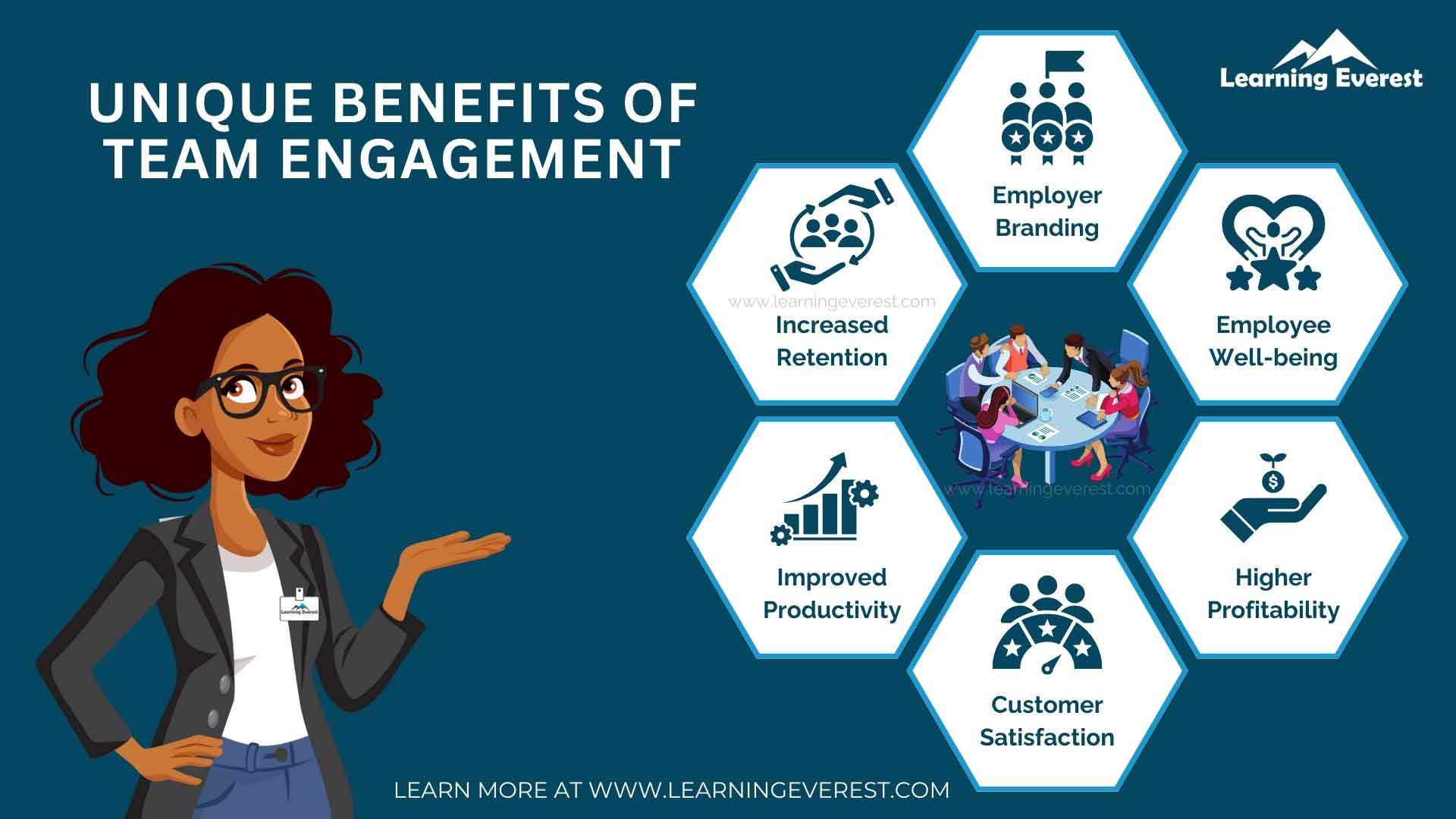
Unique Benefits of Team Engagement
Increased Retention
When team members are emotionally engaged and connected to their organization, they develop a stronger sense of belonging and feel empowered resulting in the likelihood to stay at the workplace for a longer period. Moreover, the members of the team feel their values and goals align with that of the organization increasing retention.
Higher Productivity
Engaged teams are highly motivated and goal-oriented and strive to bring excellence to every task they perform. With the determination to work together for a common goal, their efforts project path to faster project completion with accuracy and precision noticeably elevating overall productivity.
Stronger Customer Satisfaction
Promoting team engagement encourages stronger customer satisfaction by being responsive, and consistent in work that leaves a positive impression. With higher productivity associated with engagement, tasks are completed much ahead of deadlines, resolving all the customer needs leading to greater satisfaction in the customers.
Higher Profitability
Profitability is an essential component of any successful business, and team engagement plays an indispensable role in driving it. When engaged employees offer productive solutions and products that answer customer needs in faster turnaround times, it brings higher profitability. Furthermore, higher retention of employees associated with team engagement cuts significant costs in mass recruiting new hires and lost productivity.
Employee Well-being
A Gallup study revealed that “Engagement and well-being are reciprocal-each influences the future state of the other.” An employee experiences emotional well-being in the workplace when they feel safe, supported, valued, and connected. Team engagement fosters this sense of connection reducing mental fatigue, burnout, and absenteeism by contributing to emotional balance.
Employer Branding
Employer branding refers to the perception of an employer by the current employees, potential candidates, and the public. Through elevated team engagement, the reputation of the organization is being built in the form of positive feedback from the members and the insights customers and clients perceive.
According to another significant Gallup research, businesses with elevated engagement witnessed “a 10% increase in customer ratings, a 20% increase in sales, and a 21% boost in profitability.”
How to Improve Team Engagement in the Workplace
Improving team engagement offers a wide range of benefits for the organization. Investing in team engagement is the best the business can perform to contribute to its organizational success. However, team engagement doesn’t happen overnight, but is cultivated through several actions taken collectively by the employer and employees. Let’s delve into how to improve team engagement in the workplace.
How to Improve Team Engagement #1: Onboarding
Strong onboarding is an effective strategy for driving long-term engagement. When new hires feel valued, included, and guided, they are more likely to develop an interest in the organization and accelerate their ability to contribute meaningfully to the team.
How to Improve Team Engagement #2: Leadership Development
As per statistics, “70% of the variance in team engagement is determined solely by the manager.”(Source: Gallup). Leadership should adopt strategies to enhance the contributions of every single member of the team and instill in them the confidence to open up their perspectives. This requires the leadership to be aware and possess the necessary skills, which are enhanced through leadership development. Leadership development programs such as Emotional Intelligence (EQ) training, inclusive leadership training, change management training, conflict-resolution training, etc. teach leaders to empower employees and contribute to team engagement.
How to Improve Team Engagement #3: Promote Work-life Balance
A healthy work-life balance is a crucial factor that promotes improving team engagement. When employees feel they’re offered enough flexibility at their organization to manage their personal and professional lives, they’re more likely to be focused at work and create deeper engagement with their roles and responsibilities.
How to Improve Team Engagement #4: Offer Appropriate Resources
Along with guidance and flexibility, access to the right tools and technology encourages employees to be better equipped to excel in their roles and engage with other team members. In other words, lack of resources can lead to frustration and disengagement while the presence of appropriate resources fosters continuous engagement.
How to Improve Team Engagement #5: Recognize and Reward
Recognition and rewards are powerful motivators fueling team engagement. With well-structured recognition programs that address the unique contributions of employees, they feel more valued, seen, and appreciated leading to increased commitment and engagement.
How to Improve Team Engagement #6: Provide Growth Opportunities
Offering appropriate growth opportunities such as skill-based training, cross-functional projects, mentoring, job rotation, and assessments are critical factors driving engagement. The organization’s commitment to employee’s personal and professional growth makes them motivated to engage with the team and contribute at their level best.
How to Improve Team Engagement #7: Encourage Peer Recognition
Peer recognition is the act of acknowledging and appreciating the efforts and positive behaviors of colleagues. When team members acknowledge and appreciate each other’s efforts, it fosters a positive culture of increased engagement
How to Improve Team Engagement #8: Promote Team-Building Activities
Team-building activities such as workshops, outbound training programs, volunteering activities, and team outings encourage camaraderie and a sense of belongingness in every member strengthening team engagement.
How to Improve Team Engagement #9: Internal Networking
Internal networking can be defined as a practice including building professional relationships within an organization by encouraging employees to interact beyond their immediate teams enhancing collaboration and wider team engagement.
Conclusion
Team engagement is the cornerstone of a thriving, high-performing workforce. Its benefits are far-reaching including increased retention, higher productivity, stronger customer satisfaction, greater profitability, enhanced emotional well-being, and strengthening the employer brand, making the organization more attractive to both current and future talent. To foster such engagement, organizations must be intentional about their strategies. This includes implementing effective onboarding processes, investing in leadership development, promoting work-life balance, ensuring access to appropriate resources, recognizing and rewarding efforts, encouraging peer recognition, and providing meaningful growth opportunities.
Furthermore, promoting team-building activities and internal networking can cultivate a deeper sense of connection and collaboration across the workforce. By prioritizing and consistently nurturing these practices, organizations can create a culture where team members feel motivated, valued, and empowered, elevating engagement.
Infographic
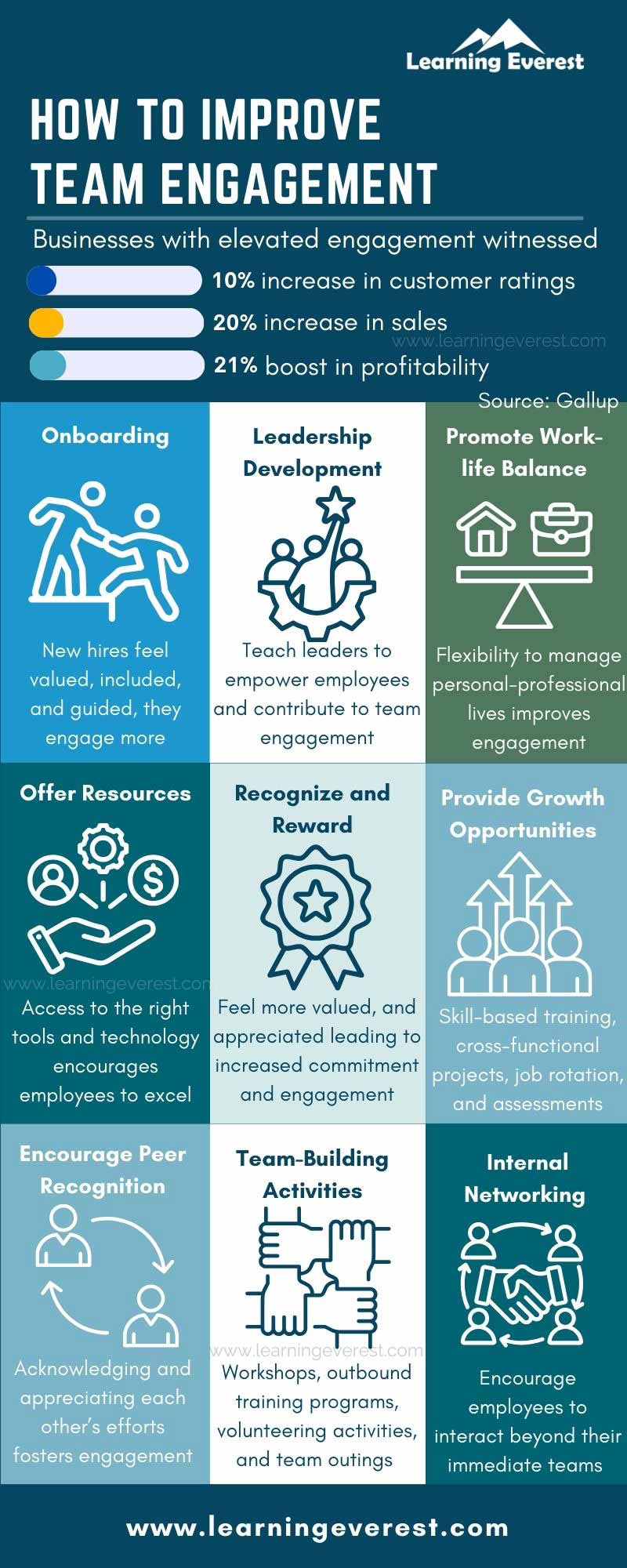
How to Improve Team Engagement
Knowledge Check!
Frequently Asked Questions (FAQs)
What are the benefits of increased team engagement?
The benefits of team engagement are far-reaching including increased retention, higher productivity, stronger customer satisfaction, greater profitability, enhanced emotional well-being, and strengthening the employer brand, making the organization more attractive to both current and future talent.
How to improve team engagement in the workplace?
The ways to improve team engagement include implementing effective onboarding processes, investing in leadership development, promoting work-life balance, ensuring access to appropriate resources, recognizing and rewarding efforts, encouraging peer recognition, and providing meaningful growth opportunities. Furthermore, promoting team-building activities and internal networking can cultivate a deeper sense of connection and collaboration across the workforce.
Live Online Certification Trainings




Our Clients Our Work
