

Effective leadership is a critical factor in every organization’s success. However, identifying future leaders or managing succession planning does not rest solely with the organization. Employees play a vital role in enhancing their leadership potential by developing a personal leadership development plan.
Table of Contents
- An Overview of Personal Leadership Development Plan
- Steps in Developing a Personal Leadership Development Plan
- The Role of L&D in Developing a Personal Leadership Development Plan
- Conclusion
- Infographic
- Knowledge Check!
- Frequently Asked Questions (FAQs)
- What is a leadership development plan?
- What is a personal leadership development plan?
- What are the key steps in developing a personal leadership development plan?
- What is the role of L&D in developing a personal leadership development plan?
This blog explores the definition and importance of a Personal Leadership Development Plan, the key steps in creating one, and the role of Learning and Development (L&D) in supporting this process.
An Overview of Personal Leadership Development Plan
A leadership development plan is a strategic plan often designed by organizations to develop competencies and potential for employees and teams to be future leaders. A well-structured leadership development plan addresses the leadership gaps existing in organizations, as studies reveal “77% of organizations struggling with leadership gaps at all levels.” (Source: eLearning Industry). A more personalized and individually driven leadership development plan is the personal leadership development plan that helps individuals enhance their leadership capabilities and self-awareness to grow and develop as leaders.
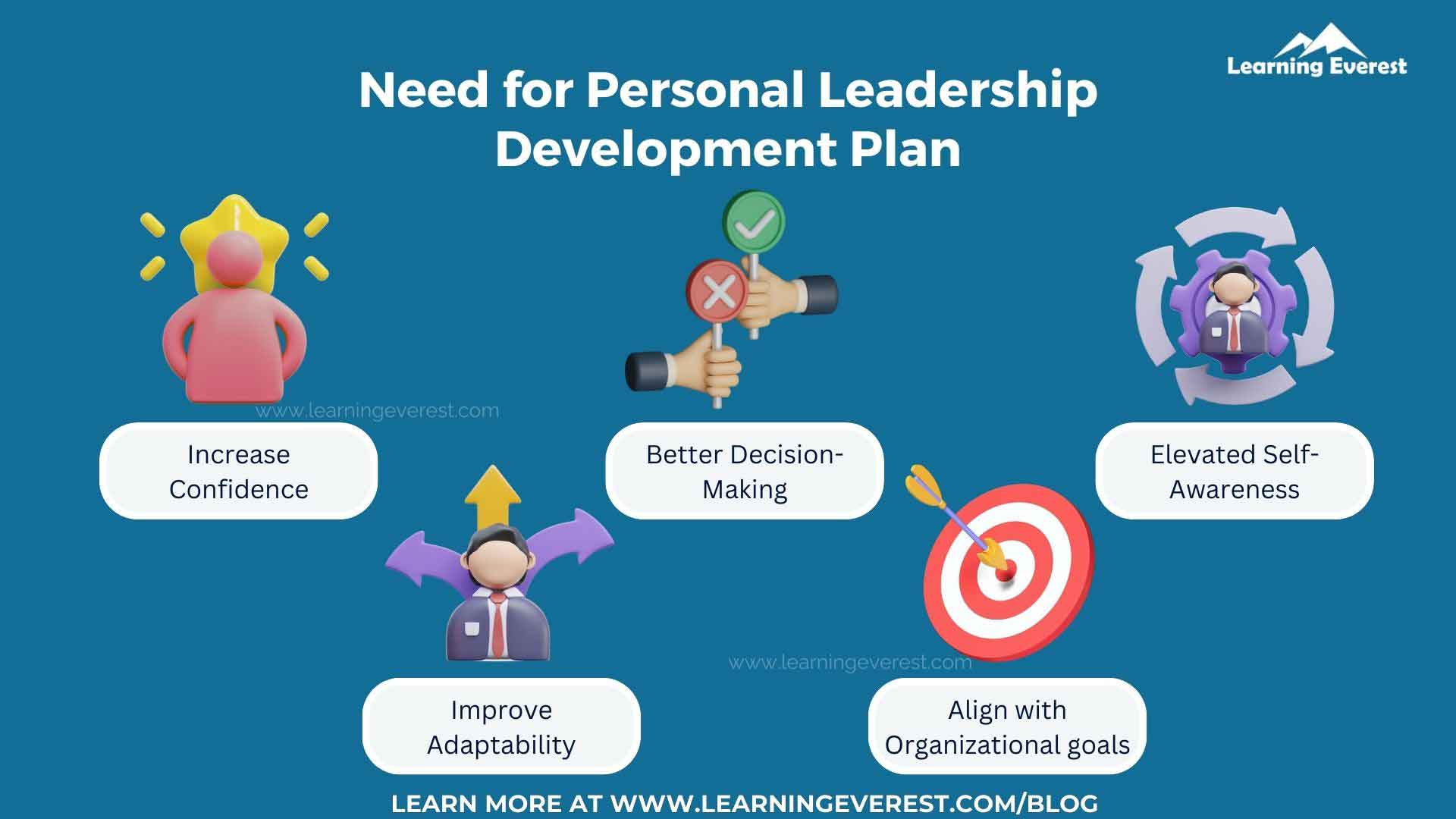
This framework provides individuals with the capability to identify their strengths, weaknesses, opportunities for growth, threats hindering growth, and undertake steps in progressing to effective leadership. Developing a personal leadership development plan is essential for building increased confidence, better decision-making, elevated self-awareness, improved adaptability, and aligning personal goals with organizational mission and vision. In this sense, a personal leadership development plan serves as a vital framework that empowers individuals to take ownership of their growth, contributing meaningfully to both their personal and professional advancement and preparing them to be future leaders.
Steps in Developing a Personal Leadership Development Plan
Alongside recognizing the distinct importance of developing a personal leadership development plan, it is equally crucial to put them into action with thoughtful reflection and strategic planning. Let’s explore the key steps in developing a personal leadership development plan.
Identify Core Values
The first step in developing a personal leadership development plan is to identify a leader’s core values, such as integrity, accountability, respect, resilience, and a commitment to growth through reflection and self-assessment. Moreover, this step encourages individuals to recognize and address any inner conflicts or limiting beliefs that may hinder personal growth.
Create Personal Vision Statement
Alongside identifying core values, the next crucial step in developing a personal leadership development plan is crafting a personal vision statement. This statement articulates an individual’s goals, aspirations, passions, and the strengths they wish to develop and outlines the impact the individual aims to make on themselves and their profession.
Need For Personal Leadership Development Plan
Assessment of Essential Skills
In addition to identifying core values, assessing essential leadership skills is a critical step in developing a personal leadership development plan. This involves not only recognizing the skills an individual currently possesses but also the competencies required for effective leadership, such as self-awareness, emotional intelligence, communication, decision-making, and conflict resolution. This step empowers individuals to point out the gaps between their current abilities and their leadership goals, providing a clear focus for development efforts.
Peer Assessment
In addition to self-assessment, incorporating peer assessment is a valuable step in developing a personal leadership development plan. Peer feedback offers external perspectives that can reveal weaknesses or confirm strengths of an individual aspiring to be a leader. This process may involve using structured tools such as rubrics, surveys, or 360-degree feedback forms to gather input from colleagues, team members, or mentors, and paves the way to a realistic leadership growth plan.
Development of Action Plan
After identifying core values and assessing essential leadership skills, the next step in the personal leadership development plan is to develop a clear and actionable plan. This action plan outlines specific leadership goals, the timeline for achieving them, the steps required to reach each milestone, and the resources needed, ranging from mentorship and training programs to tools and materials. The action plan encourages individuals to stay focused and motivated in their leadership journey.
Implementation
A well-designed action plan loses its value if it is not put into practice, making implementation the most crucial aspect of a personal leadership development plan. These stresses maintaining focus through following the set action plan.
Monitoring Progress
Developing a personal leadership development plan includes the stage of evaluating and monitoring progress, which involves regularly reviewing whether the individual is meeting the goals outlined in the action plan, assessing how effectively each step has been executed, and determining whether the strategies employed are producing the desired results.
The Role of L&D in Developing a Personal Leadership Development Plan
Now the question remains: what is the role of L&D in developing a Personal Leadership Development Plan? While L&D undoubtedly plays a significant role in facilitating leadership development at an organizational level, personal leadership development plans are inherently personal, requiring individuals to take ownership of their growth. However, this does not mean L&D is excluded from the process. Let’s take a closer look at how L&D can actively support developing a personal leadership development plan.
Bridge Individual Aspirations with Organizational Goals
One of the major roles of L&D in the development of a personal leadership development plan is to help individuals align their personal growth objectives with the broader goals of the organization. As L&D possesses a comprehensive understanding of the organization’s mission, vision, and strategic direction, it can offer insights and frameworks to ensure that individual leadership efforts are aligned with the organization’s long-term goals.
Structured Learning Opportunities
L&D offers personalized and structured learning opportunities that support individual growth, enhance practical skills, effective communication, and leadership competencies. By identifying the unique needs of each aspiring leader, L&D can predict learning paths that foster their professional development, along with encouraging them to attain their personal leadership development plan. Moreover, L&D encourages the development of the plan by expanding the professional network by providing access to discussion forums and other platforms.
Coaching and Mentorship Support
L&D supports individuals in their personal leadership development plans by offering effective mentorship and coaching opportunities. These help individuals refine their action plans, overcome challenges, and stay committed to their goals. Furthermore, L&D can support individuals by sharing real-world case studies of successful personal leadership development plans, serving as valuable models for aspiring leaders.
Monitoring Progress
Monitoring progress is a crucial step in a personal leadership development plan, and L&D plays an instrumental role in facilitating this. By providing access to assessment tools, performance metrics, self-reflection frameworks, and feedback systems, L&D helps individuals track their development and highlight areas for improvement. Additionally, L&D professionals can help interpret the results and provide targeted resources to address specific gaps, ensuring the attainment of leadership development.
Conclusion
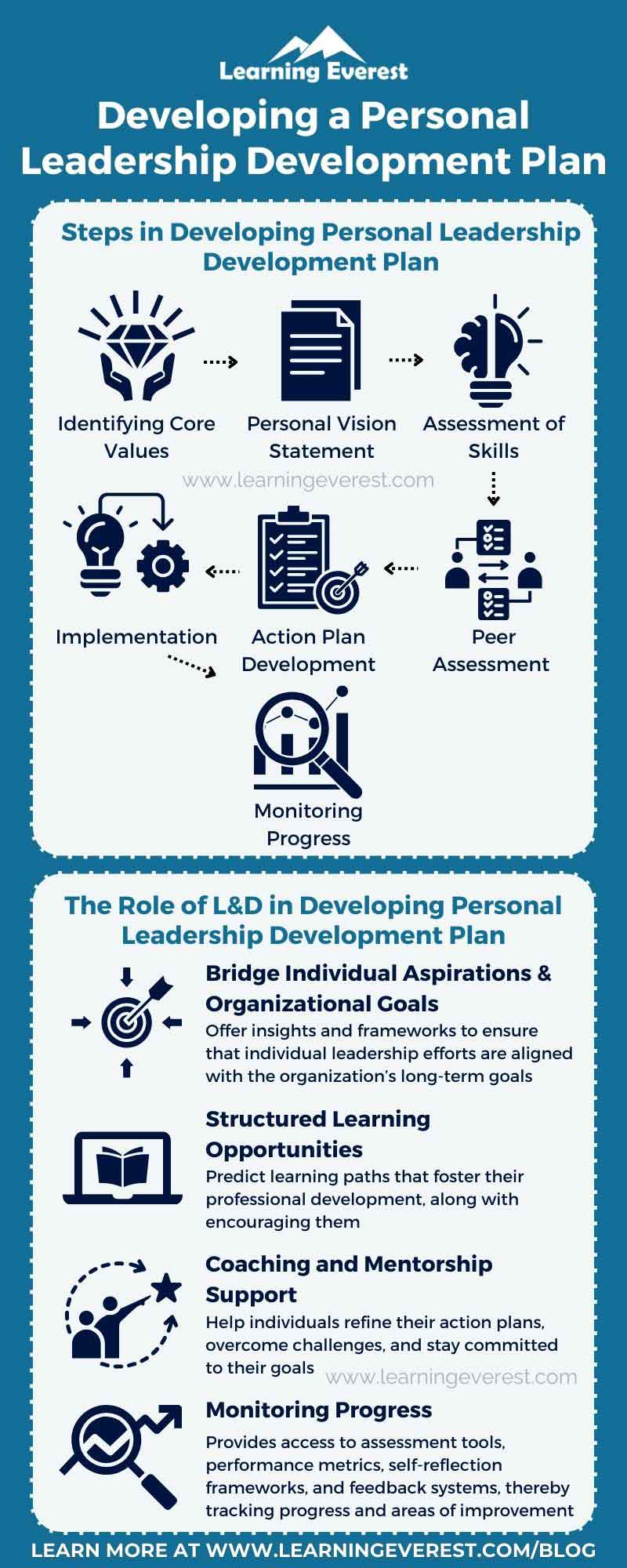
In a nutshell, developing a personal leadership development plan is essential for individuals to enhance their leadership capabilities and deepen self-awareness. The process involves several key steps of identifying core values, crafting a personal vision statement, assessing essential leadership skills, gathering peer feedback, creating a structured action plan, implementing it effectively, and continuously monitoring progress.
While a personal leadership development plan is a personal initiative, organizational support, especially from Learning and Development (L&D) teams, is crucial. L&D plays a pivotal role by helping individuals align their goals with organizational priorities, offering personalized learning opportunities, providing coaching and mentorship, and enabling effective tracking of leadership growth. Organizations must actively support individuals in creating and executing a personal leadership development plan to empower future leaders and foster a stronger leadership culture.
Infographic
Developing a Personal Leadership Development Plan
Knowledge Check!
Frequently Asked Questions (FAQs)
What is a leadership development plan?
A leadership development plan is a strategic plan often designed by organizations to develop competencies and potential for employees and teams to be future leaders.
What is a personal leadership development plan?
A personal leadership development plan is a more personalized and individually driven leadership development plan that helps individuals enhance their leadership capabilities and self-awareness to grow and develop as leaders.
What are the key steps in developing a personal leadership development plan?
The process involves several key steps of identifying core values, crafting a personal vision statement, assessing essential leadership skills, gathering peer feedback, creating a structured action plan, implementing it effectively, and continuously monitoring progress.
What is the role of L&D in developing a personal leadership development plan?
L&D plays a pivotal role by helping individuals align their goals with organizational priorities, offering personalized learning opportunities, providing coaching and mentorship, and enabling effective tracking of leadership growth.
Live Online Certification Trainings




Our Clients Our Work
