

eLearning data privacy is a significant concern for Learning and Development (L&D) professionals and learners alike, given the vast amount of personal and professional data it collects.
Table of Contents
Although gathering data is valuable for personalization and analytics, it heightens vulnerability to cyber threats. To gain a deeper understanding of eLearning data privacy, including its key risks, the importance, and strategies for ensuring eLearning data privacy, keep reading!
Understanding eLearning Data Privacy
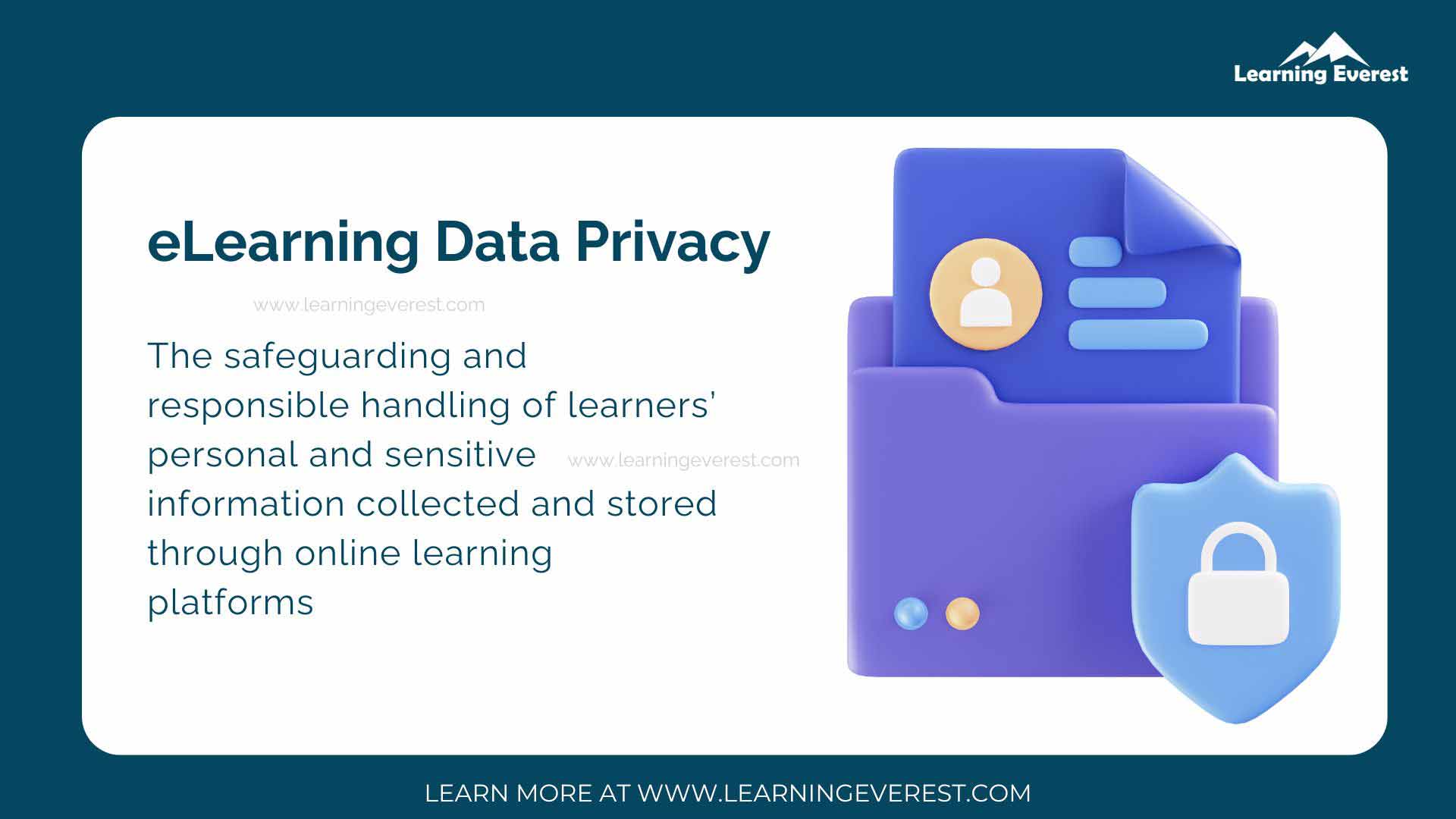
eLearning data privacy refers to the safeguarding and responsible handling of learners’ personal and sensitive information collected and stored through online learning platforms. These data include names, email addresses, login credentials, learning progress, assessment results, and other identifiable information, which can undergo unauthorized access, misuse, or cybersecurity threats if not properly protected, raising questions about the credibility of the eLearning initiative. “Data privacy is a top priority for 83% of the respondents, which influences their trust in the brands.” (Source: PwC).
eLearning Data Privacy
Key eLearning Data Privacy Risks
The key e-learning data privacy risks that are commonly encountered and potentially compromise learner trust and damage the reputation of the L&D department are:
Data Breach
Data breaches or data leakage refer to the unauthorized access, exposure, or disclosure of confidential, private, or protected information. In the context of eLearning platforms, such breaches often occur due to weak password protection, vulnerabilities within Learning Management Systems (LMS), or phishing attacks targeting users and administrators.
Identity Theft
Identity theft involves the illegal acquisition and use of an individual’s personally identifiable information (PII) for fraudulent purposes. With the rise of digital advancements, this threat is continuously growing. eLearning platforms can encounter identity theft, involving impersonating students, misusing their credentials, or harvesting their data for unauthorized activities.
Insider Threats
Another potential risk involves back-end users intentionally or unintentionally accessing or misusing learner data, undermining trust and raising serious concerns about the reliability of the platform. As per 2022 Data Breach Investigations by Verizon, “75% of attacks encountered in the educational services sector were from an external source, the rest were internal attacks.” (Source: Saima.ai).
Third-Party Exploitation
eLearning platforms often rely on integration with multiple third-party vendors or partners to ensure impactful delivery. However, these third parties may sometimes misuse personal data or share it without the user’s consent, leading to third-party data exploitation.
Excessive Data Retention
Keeping learners’ personal or progress-related data for longer than necessary without consent poses a privacy and security risk.
Importance of eLearning Data Privacy
Understanding the significant data privacy risks associated with eLearning, it is essential that every program integrates strong data protection measures and prioritizes eLearning data privacy at every stage. Here are some reasons why eLearning data privacy is critically important.
To Protect Learner Sensitive Data
eLearning data privacy is crucial for protecting the sensitive information that learners share during login or enrolment processes. The critical information, including personal, academic, and sometimes financial details, must be securely handled to prevent misuse or unauthorized access. Strong data privacy practices ensure that this information is safeguarded from cybersecurity threats.
Impact on Organization
Implementing strong eLearning data privacy practices has a significant impact on an organization. It protects learner data, builds user confidence, enhances brand reputation, and helps prevent monetary losses due to data breaches or legal consequences. By only accessing the necessary information and safeguarding it from misuse or unauthorized access, organizations demonstrate their commitment to ethical data handling, highlighting them as promoting a secure learning environment.
Legal Obligations
Apart from being a good practice for safeguarding data, eLearning data privacy is also a legal requirement falling under the purview of multiple national and international laws. Handling the PII should adhere to laws such as the General Data Protection Regulation (GDPR) by the EU and the Family Educational Rights and Privacy Act (FERPA) by the USA. Non-compliance to the regulations can lead to legal actions and even permanent damage to brand’s reputation.
Ensures New Enrolments
When an organization or its L&D department is recognized for securely safeguarding user data, it builds a strong reputation that encourages more learners to enroll in its courses. Furthermore, demonstrating a commitment to data privacy supports increased enrolment and participation in future learning programs offered by the department or organization.
Protect Learning Content
In addition to protecting learner-sensitive information, eLearning data privacy plays a vital role in safeguarding the integrity of learning content. This includes protecting course materials, assessment methods, learner progress data, and other related information from cybersecurity threats, unauthorized access, and intellectual property theft.
Strategies to Ensure eLearning Data Privacy
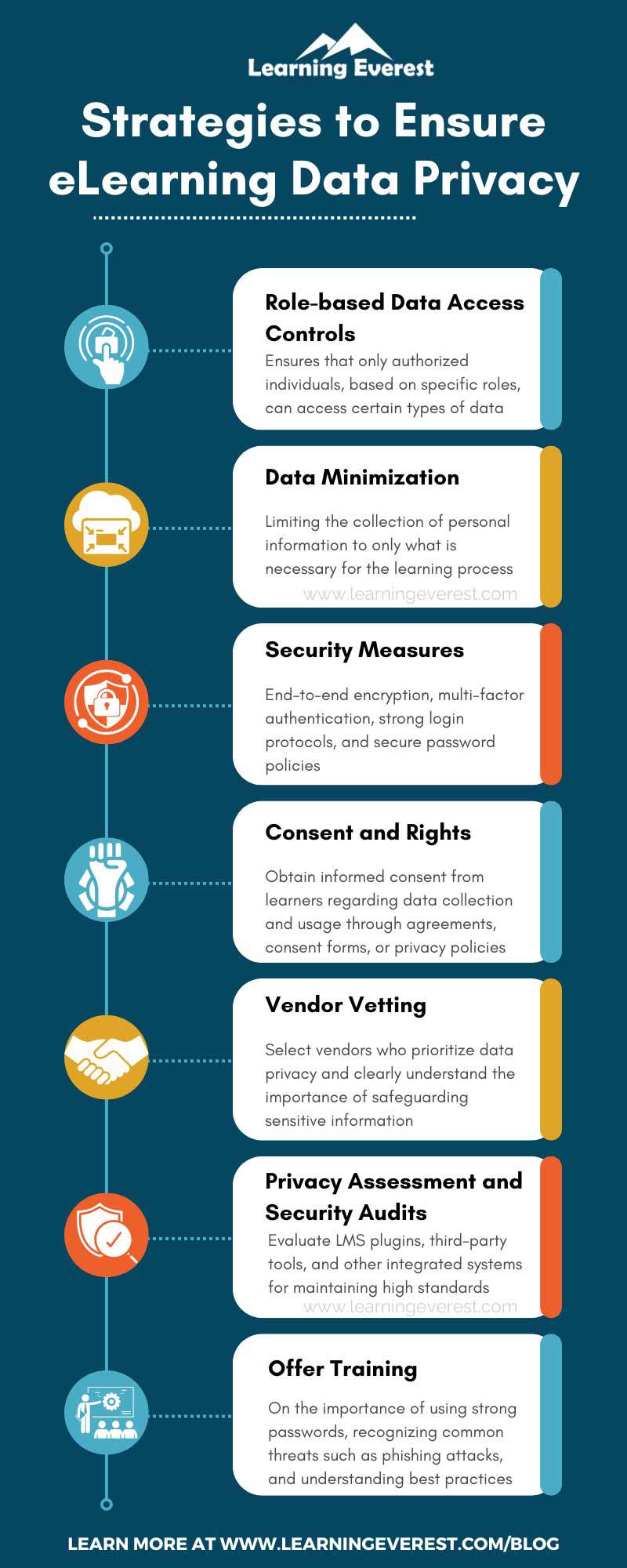
With the growing importance of eLearning data privacy, L&D professionals need to prioritize and implement strong privacy measures within their digital learning environments. Some key strategies to help safeguard eLearning data privacy are:
Role-Based Access Controls
One of the key strategies to ensure eLearning data privacy is the implementation of role-based access controls (RBAC) that ensures that only authorized individuals, based on their specific roles, can access certain types of data. It limits unnecessary data exposure and hinders unauthorized users from viewing or collecting sensitive information.
Data Minimization
Data minimization is a critical strategy involving limiting the collection of personal information to only what is necessary for the learning process and avoiding the gathering of excessive or irrelevant data.
Security Measures
Implementing robust security measures, such as end-to-end encryption, multi-factor authentication, strong login protocols, and secure password policies, is essential for upholding eLearning data privacy. These measures help protect sensitive data from unauthorized access throughout the learning process and foster greater confidence among learners.
Consent and Rights
In addition to implementing security measures, obtaining informed consent from learners regarding data collection and usage through agreements, consent forms, or privacy policies is imperative to ensure transparency and empower learners to make informed decisions about their personal information.
Vendor Vetting
eLearning programs often rely on external vendors for services such as video conferencing, assessment tools, cloud storage, or Learning Management Systems (LMS), offering potential privacy risks. It is therefore crucial to select vendors who prioritize data privacy and clearly understand the importance of safeguarding sensitive information. Moreover, establishing data privacy agreements helps ensure compliance and builds a responsible vendor relationship.
Privacy Assessment and Security Audits
Conducting regular security audits and privacy assessments, including evaluating LMS plugins, third-party tools, and other integrated systems, is essential for maintaining high standards in eLearning programs.
Offer Training
Providing regular and up-to-date training to both L&D professionals and learner participants on the importance of using strong passwords, recognizing common threats such as phishing attacks, and understanding best practices for protecting personal data is essential for promoting a culture of privacy and security.
Conclusion
In short, eLearning data privacy involving the safeguarding and responsible handling of learners’ personal and sensitive data is essential to prevent data breaches, identity theft, insider threats, third-party exploitation, and excessive data retention. Furthermore, its elevated importance lies in protecting learners’ sensitive information, impacting organizations, fulfilling legal obligations, encouraging new enrolments, and protecting learning content. Implementing strategies such as role-based access controls, data minimization, security measures, informed consent and rights, vendor vetting, privacy assessments, security audits, and regular training ensures eLearning data privacy. Organizations can implement these practices, and L&D professionals can ensure that learning programs adhere to data privacy standards.
Infographic
Strategies to Ensure eLearning Data Privacy
Knowledge Check!
Frequently Asked Questions (FAQs)
What is eLearning data privacy?
eLearning data privacy refers to the safeguarding and responsible handling of learners’ personal and sensitive information collected and stored through online learning platforms.
What is the importance of eLearning data privacy?
The importance of eLearning data privacy lies in protecting learners’ sensitive information, impacting organizations, fulfilling legal obligations, encouraging new enrolments, and protecting learning content
What are the strategies for ensuring eLearning data privacy?
Implementing strategies such as role-based access controls, data minimization, security measures, informed consent and rights, vendor vetting, privacy assessments, security audits, and regular training ensures eLearning data privacy.
Live Online Certification Trainings

Our Clients Our Work
